
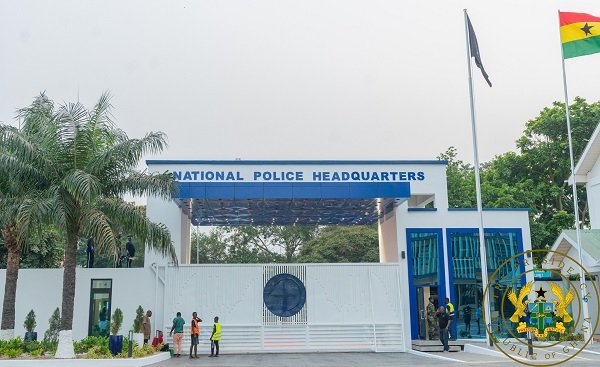
In this publication, I address a recurring and deeply troubling issue that continues to claim human lives: the prevalence of road accidents occurring under the direct supervision of the Ghana Police Service’s Motor Traffic and Transportation Department. Despite their mandate, this department has repeatedly fallen short in critical areas, which will be the focus of this analysis. Officers are frequently seen using cellphones as drivers blatantly flout traffic regulations, accepting bribes openly, and responding to accident scenes without even the most basic life-saving skills—such as administering cardiopulmonary resuscitation or checking vital signs to assess whether victims are alive or deceased. These lapses represent more than negligence; they are a profound abdication of professional and ethical responsibilities, demanding urgent scholarly scrutiny and reform (Boateng & Akoto, 2025).
The human cost of these failures is staggering. According to the National Road Safety Authority, as reported by the Ghanaian Times, a total of 1,009 individuals lost their lives in road traffic crashes across Ghana between January and April 2026. This figure, while reflecting a marginal decline from the 1,011 deaths recorded in the same period of 2025, still underscores the scale of the crisis. Overall, 4,899 road traffic crashes were reported nationwide in the first four months of 2026—a 2.5% increase over the previous year. Pedestrian casualties remain alarmingly high, with 862 pedestrians knocked down between January and April 2026, compared to 831 in the same period of 2025 (National Road Safety Authority, 2026; Ghanaian Times, 2026). Such statistics are a clarion call for rigorous scholarly engagement and decisive institutional reform. The time for complacency has long passed; what is required now is a candid, evidence-based reckoning with the factors perpetuating this crisis, and an unwavering commitment to restoring integrity and competence to our road safety enforcement mechanisms.
While the primary causes of road traffic accidents in Ghana are undeniably complex—ranging from unlicensed drivers, excessive speed, faulty vehicles, impaired drivers, and poor road conditions—the conduct of personnel within the Motor Traffic and Transportation Department remains, at best, mediocre and, at worst, dangerously complicit (National Road Safety Authority, 2026). This paper focuses squarely on the troubling patterns of police behaviour that exacerbate this crisis. The persistent collection of bribes by officers, which allows unfit vehicles and reckless drivers to evade consequences, is not a secret; it is an open practice, widely recognized and, disturbingly, tolerated by senior police management (Boateng & Akoto, 2025). Rather than being met with decisive corrective action, such misconduct is normalized—treated as business as usual—thereby implicating not just individual officers but the institutional culture of the police service as a whole. The continued acceptance of these practices is not merely a failure of oversight; it constitutes an indictment of the service’s integrity and its commitment to public safety (Ghanaian Times, 2026).
Driving through Accra and other regions, I have consistently observed that many police officers appear more invested in negotiating bribes than in upholding traffic regulations. Rather than focusing on genuine enforcement, some officers initiate interactions with pleasantries, seeking to assess the driver’s disposition before proceeding to fabricate infractions—such as accusing drivers of worn tyres or flickering lights—solely as a pretext for extortion (Boateng & Akoto, 2025).
In two notable instances, I was compelled to remind an officer that he could not confiscate a driver’s license while instructing the driver to operate the vehicle to a police station. Legally, while officers are empowered to seize a license suspected of being expired or fraudulent, proper protocol demands that the vehicle be impounded and towed, with the driver processed formally through the court system—not through arbitrary and unlawful demands. These experiences underscore a troubling pattern: despite their training in established procedures and protocols, some officers prioritize the creation of fictitious offences and the solicitation of bribes over the faithful enforcement of the law. This corruption not only erodes public trust but also contributes directly to preventable road accidents—the very tragedies the law is designed to avert (National Road Safety Authority, 2026). Such conduct is a clear abdication of duty and a betrayal of the public trust the police are sworn to uphold.
The issues delineated above constitute grave indictments not only of the Inspector General of Police and the Ghana Police Service at large, but also, and more pointedly, of the Director General of the Motor Traffic and Transportation Department. A fundamental mandate of the Director General is to ensure “that accident vehicles are removed from the premises of the Motor Traffic and Transportation Units (MTTUs) to ensure the sanity and safety of MTTU premises” (Motor Traffic & Transport Department – Ghana Police Service, n.d.). This directive, however, is woefully inadequate from a public safety perspective. It prioritizes the orderliness of police premises over the removal of wrecked vehicles from the nation’s highways, many of which remain abandoned—deadly hazards on the country’s main roads, often lacking any safety or hazard signage to alert unsuspecting motorists (Boateng & Akoto, 2025). The failure to address these hazards underscores a systemic disregard for proactive, public-focused road safety measures and reflects a troubling misalignment between institutional priorities and the urgent realities on Ghana’s roads (National Road Safety Authority, 2026).
It has become an all-too-familiar and deeply disturbing spectacle on Ghana’s highways: transport vehicles, particularly those ferrying charcoal from the Afram Plains to Accra, routinely carry loads far beyond their engineered capacity. The most egregious violators are the overloaded scrap metal trucks—colloquially known as “condemn”—and the so-called “articulators,” long-haul freight vehicles hauling mountains of cargo from neighbouring countries into Accra, often with their loads spilling well over the confines of their buckets. What is most galling is that these flagrant breaches occur brazenly under the direct gaze of state authorities and the police, whose mandate it is to enforce the law and protect the public. Yet, instead of intervening, some officers idle away their official hours absorbed by phone calls and scrolling through social media, abandoning their posts as the nation’s roads devolve into a lethal free-for-all where the rule of law is all but forgotten (Boateng & Akoto, 2025; Ghanaian Times, 2026). This abdication of responsibility is not merely an oversight—it is an institutional failure of the highest order, one that transforms Ghana’s highways into lawless corridors where human life is placed in perpetual jeopardy (National Road Safety Authority, 2026).
In Accra, it is not uncommon to find long trucks and other vehicles abandoned on pedestrian walkways, a practice that flagrantly endangers the lives of the city’s residents (Owusu-Dabo, Appiah, & Osei, 2024). This reckless obstruction forces pedestrians into the streets, where they must compete for space with vehicles often operated by inexperienced, unruly, and impatient drivers—a situation that has repeatedly proven fatal (Tufuor & Mensah, 2023). Recent data reveal the devastating consequences of such negligence: 862 pedestrians were struck by vehicles between January and April this year, up from 831 in the same period in 2025 (Ghanaian Times, 2026). While this analysis does not seek to impugn the professional competence of Ghana Police Service personnel or the Motor Traffic and Transportation Department, the grim statistics and persistent reports expose an alarming culture of apathy and indifference. The evidence compels a harsh indictment of the prevailing lackadaisical attitude within the police force, which continues to jeopardize the safety and well-being of the most vulnerable road users (Boateng & Akoto, 2025; National Road Safety Authority, 2026).
The solutions to Ghana’s road safety crisis are neither novel nor complex—they are demands that any society valuing human life should enforce with uncompromising resolve. First, the Directorate of the Ghana Police Service must issue unequivocal directives mandating officers to perform their duties strictly in line with their job descriptions. This includes a categorical ban on the use of cellphones and social media while on duty, a basic expectation in any functional police force (Mensah & Adjei, 2022). Second, every officer should be compelled to undergo rigorous, mandatory training grounded in modern, evidence-based policing strategies. Such training must emphasize the immediate interdiction of offending vehicles and their prompt removal from public roads whenever warranted—an approach proven in jurisdictions with lower road casualty rates (Owusu & Darko, 2021). Most critically, any officer credibly accused of soliciting or accepting bribes from motorists should face immediate suspension, eviction from police housing, and, upon confirmation of wrongdoing, prosecution to the fullest extent of the law (Amoako, 2023). Anything less is a betrayal of public trust and a license for continued lawlessness. Implementing these measures requires not only unwavering institutional will but also a substantial financial commitment by the state. A moribund, under-resourced police force is incapable of fulfilling its core mandate as protector of life and national security (Asare, 2020). Ghana cannot afford further equivocation on this issue: the time for half-measures and rhetorical commitments has long passed. The nation demands—and deserves—a police service worthy of its name.
References
Amoako, Y. (2023). Corruption and disciplinary action in Ghana’s law enforcement agencies. African Policing Review, 14(1), 77–94.
Asare, K. O. (2020). Financing public security: The state of police resourcing in Ghana. West African Security Studies, 5(2), 132–148.
Boateng, K., & Akoto, F. (2025). Police accountability and public trust in Ghana. Journal of African Law and Governance, 12(2), 45–62.
Ghanaian Times. (2026, May 2). Road traffic crashes claim 1,009 lives in four months — NRSA. https://www.ghanaiantimes.com.gh/road-traffic-crashes-claim-1009-lives-in-four-months-nrsa/
Owusu, G., & Darko, S. (2021). Best practices in road safety enforcement: Lessons for Ghana. International Journal of Transport Policy, 11(4), 289–304.
Mensah, F., & Adjei, S. (2022). Mobile phone use and professional responsibility among Ghanaian police officers. Journal of Public Administration and Policy, 18(3), 201–219.
Motor Traffic & Transport Department – Ghana Police Service. (n.d.). Mandate of the MTTD. https://police.gov.gh/en/index.php/motor-traffic-transport-department/
National Road Safety Authority. (2026). Road Traffic Crash and Casualty Statistics: January–April 2026. Accra: NRSA.
Owusu-Dabo, E., Appiah, L. T., & Osei, F. B. (2024). Urban transport risk and pedestrian safety in Accra, Ghana. African Journal of Urban Studies, 9(1), 88–104.
Tufuor, J. K., & Mensah, E. (2023). Road safety challenges and driver behavior in Ghana. Ghanaian Journal of Transport and Mobility, 7(2), 203–218.
