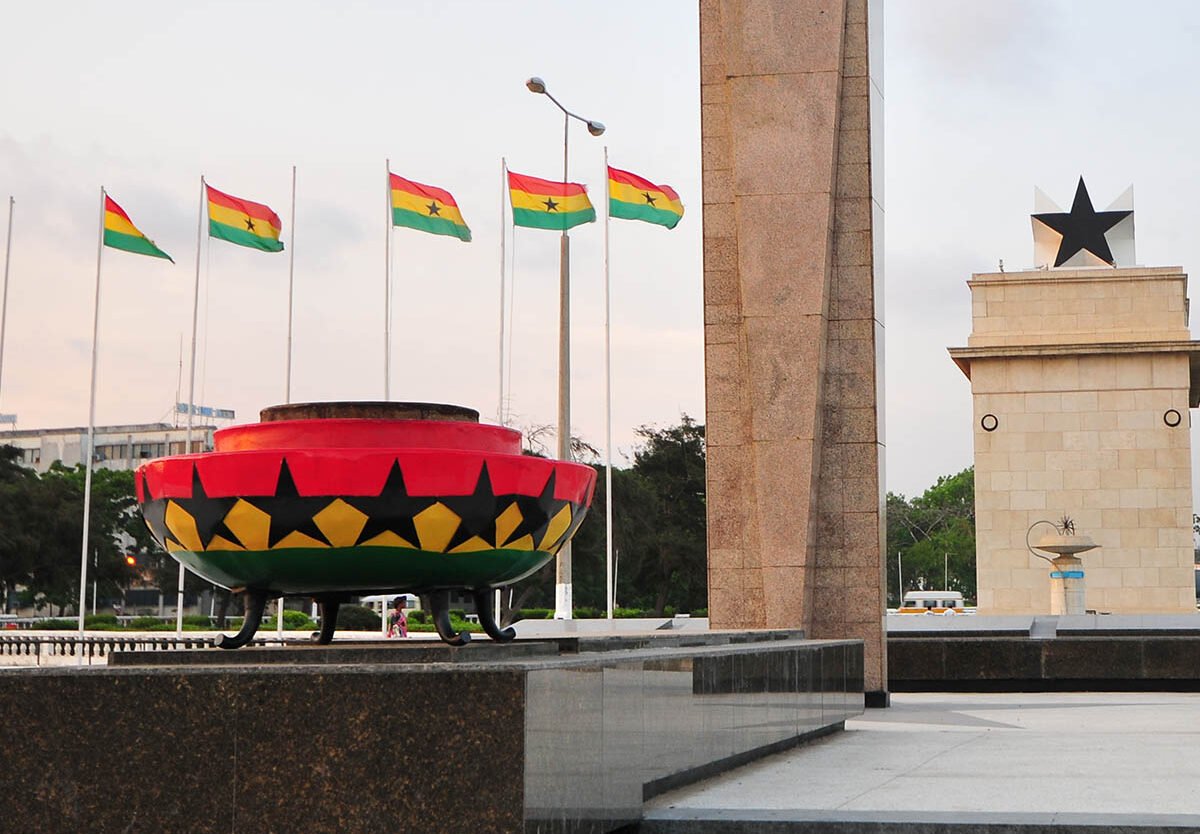
Contemporary Western influence over Ghana persists through insidious mechanisms: educational programs, financial loans, public accolades, and the perpetuation of unattainable promises (Nkrumah, 1965; Ake, 1981). These strategies frequently serve to infantilize the Ghanaian leadership, shifting expectations and undermining genuine autonomy. In the twenty-first century, Ghana’s sovereignty is too often reduced to a modern vassalage—a servile status that belies the rhetoric of independence and perpetuates a subordinate relationship with former colonial and imperial powers (Young, 1994).
Drawing upon the enduring insights of Kwame Nkrumah, this analysis frames a critical discussion on the current state of Ghanaian sovereignty. Nkrumah stands among the most influential postcolonial African political leaders of the past millennium—his legacy, though not unblemished, is distinguished by a relentless commitment to dismantling colonial structures and pursuing continental unity. Acknowledging his profound grasp of colonial history and philosophy, and his keen awareness of the geopolitical forces shaping Africa during the era of so-called independence, is essential (Nkrumah, 1965).
In one of the most searing chapters of both his leadership and Ghana’s turbulent history, Nkrumah emerged as a figure both cathartic and prophetic. He warned that a rejection of the revolutionary pathway would doom Ghana to a terminal relapse into colonial slaughter, engineered by leaders afflicted with colonial affectation—most notably, a cadre of Sandhurst-trained military officers and their colonial collaborators (Nkrumah, 1965). In exasperation, Nkrumah decried the nation’s tragic return to the colonial orbit, denouncing the abandonment of a blueprint for authentic political, economic, social, and cultural liberation. His warnings resonate with unnerving clarity today: Ghana has been reduced to a nation that habitually measures its development by the relentless acquisition of external loans, shackled by austerity and motivated by the pursuit of fleeting electoral gains (Boafo-Arthur, 2007). The genuine investment in sovereignty—the imperative to think as Africans and act autonomously, beyond the intellectual and economic plantations of neo-colonialism—remains a marginalized and alien concept (Nkrumah, 1965).
Sixty-nine years after Ghana’s hard-won independence, the nation—endowed with enviable natural resources and lauded as a continental exemplar of human capital—has systematically mortgaged its future to international capital and foreign business interests (Whitfield, 2018). This abdication of responsibility by those entrusted with national stewardship has jeopardized the prospects of generations yet unborn. Rather than mobilize domestic resources to drive genuine development, Ghana’s political class has consistently chosen the expedient path: a reckless borrowing spree, leveraging the nation’s natural wealth as collateral while diverting capital from critical social and academic investments, particularly in research and development (Gyimah-Boadi & Prempeh, 2012). The terms of loan agreements with the World Bank and International Monetary Fund—agreements whose consequences reverberate throughout the lives of ordinary citizens—remain cloaked in secrecy (Whitfield, 2018). What government-sponsored and party-affiliated newspapers parade as negotiations between International Financial Institution officials and Ghana’s Finance Ministry is little more than ritualistic pageantry: lectures and ultimatums that enforce compliance with externally dictated terms, stripping the nation of authentic agency and autonomy (Ake, 1981).
By subsisting on the intravenous drip of international loans and accepting demeaning tokens—such as a handful of handcuffs for the nation’s police, a transparent lever wielded by the colonial center—Ghana has, in effect, forfeited the last vestiges of her sovereignty (Nkrumah, 1965). The nation exists in name alone. Despite official proclamations about national self-reliance and security, the evidence is damning: the prerogative of securing the nation, once an inviolable attribute of statehood, has been pawned to former colonial powers for mere scraps. Euphemistic terms like “security cooperation,” “assistance,” and “training” only serve to cement a master-servant hierarchy, perpetuating colonial dominance under the guise of partnership (Boafo-Arthur, 2007). This arrangement enables the colonial center to embed itself ever deeper within the nation’s core, exerting decisive influence over both domestic and foreign policy—including the selection of Ghana’s allies—thereby stripping Ghana of genuine neutrality and betraying commitments to non-alignment (Young, 1994).
According to Nkrumah and fellow champions of the African cause such as Fanon and Memmi, Ghana’s path to genuine strength and sovereignty demanded the radical Africanization of its education system (Nkrumah, 1965; Fanon, 1963; Memmi, 1965). This transformation entailed integrating indigenous philosophies and developing curricula attuned to the country’s unique realities—rejecting the wholesale importation of colonial models. For true self and collective advancement, Africans must first be rooted in their local languages and cultures, mastering their own epistemologies before subordinating themselves to colonial languages and frameworks (Fanon, 1963). Nkrumah argued that the Africanization of education and institutions was a deliberate earthwork against the deeply embedded myth of Black inferiority—a central pillar of colonial schooling designed to perpetually relegate Africans to the status of “hewers of wood and drawers of water” (Nkrumah, 1965; Memmi, 1965).
Today, the Ghanaian child and student—and, by extension, the nation’s so-called political leaders (or, more accurately, rulers)—are reduced to colonial ventriloquists and robotic linguists. Mastery of the English language, however fractured or awkwardly performed, has become the ultimate marker of status, while the capacity to articulate thoughts in indigenous languages has atrophied, often interspersed with English in a display of linguistic subjugation. This phenomenon is neither benign nor accidental—it is the living legacy of coloniality, systematically denying African youth and rulers their intellectual sovereignty: the essential capacity to root thought and expression in African realities and lived experience. More ominously, the persistent equation of English fluency with intelligence and social standing perpetuates a corrosive culture of elevating colonial values over African ones—a process Fanon (1967) incisively describes as the “Black Skin, White Masks” syndrome.
While the public school system suffers from a chronic shortage of trained local language teachers—a deficit that urgently demands targeted intervention—the government has, in recent months, chosen instead to introduce Mandarin, Cantonese, and Arabic into the curriculum (Daily Graphic, 2022; Gyasi, 2020). The rationale behind such a policy shift is, at best, opaque. At worst, it signals the ascendancy of foreign dictates and the insidious reach of soft power, positioning external interests above the urgent need to cultivate Ghana’s own linguistic heritage and national priorities (Gyasi, 2020; Memmi, 1965). This misguided prioritization threatens to further erode cultural sovereignty and intellectual independence, deepening the nation’s vulnerability to external cultural and political influence.
In the landscape of modern Ghana’s public education system, the African Writers Series—a foundational collection of postcolonial African scholarship that once anchored African intellectualism and foregrounded indigenous history and experience through the works of Chinua Achebe, Ama Ata Aidoo, Ngũgĩ wa Thiong’o, and Ayi Kwei Armah—has been systematically neglected by contemporary educators (Awoonor, 2012; Achebe, 1958; Ngũgĩ, 1965). In its place, the curriculum is overwhelmingly dominated by canonical works of colonial literature such as Canterbury Tales, Wuthering Heights, and Macbeth—a glaring testament to the enduring colonial project of elevating European histories and epistemologies above Ghana’s own (Awoonor, 2012; Memmi, 1965; Achebe, 1958). This calculated erasure not only suppresses African literary heritage but perpetuates the intellectual subjugation of future generations.
In the realm of resource extraction, post-Nkrumah Ghana has persistently ceded leverage in negotiating mining agreements with Western corporate interests, relegating itself to a subordinate role (Memmi, 1965; Gyimah-Boadi & Prempeh, 2012). Fueled by the political class’s obsession with infrastructure—roads and buildings heralded as emblems of progress—these agreements are routinely inked with little critical evaluation of their long-term consequences for national finances, the well-being of citizens, or the environment (Daily Graphic, 2021). The mining sector remains firmly gripped by Western multinationals, even as Chinese corporations and investors aggressively encroach, often through illegal operations. Notably, Chinese actors have been implicated in environmental devastation, including rampant deforestation and contamination of vital water bodies (Gyimah-Boadi & Prempeh, 2012; Daily Graphic, 2021). Yet, those apprehended for flagrant violations of Ghana’s environmental laws rarely face prosecution. Instead, diplomatic interventions and clandestine negotiations with complicit state officials—whose hands are tied by previous or anticipated Chinese loans—ensure that offenders are quietly deported, escaping meaningful accountability (Memmi, 1965; Daily Graphic, 2021). Such practices expose the nation’s continued vulnerability to external exploitation and the corrosive effects of debt diplomacy.
On the domestic market front, Ghana’s sovereignty was brazenly surrendered to foreign corporate interests in the wake of the political upheavals of June 4, 1979 and December 31, 1981 (Amoako-Tuffour, 1998; Daily Graphic, 2019, p. 3). Once celebrated as the industrial powerhouse of West Africa—a cradle of entrepreneurial dynamism and innovation—the nation witnessed, in a matter of days, the abrupt confiscation of thriving businesses such as Pioneer Tobacco Company, Tata Brewery, and Kowus Motors. These enterprises were expropriated by the state under vague and politically charged accusations of corruption, their owners summarily banished from the country (Amoako-Tuffour, 1998, p. 45).
Under the banner of neoliberalism and at the behest of a divestiture programme dictated by the World Bank and International Monetary Fund, the Provisional National Defence Council (PNDC) regime led by Flight Lieutenant Jerry John Rawlings proceeded to auction off state-owned enterprises for a pittance (Boafo-Arthur, 1999, p. 613). This externally enforced policy package shattered Ghana’s industrial backbone, giving rise to the proliferation of container shops and open-air markets across the nation while fueling a dramatic rise in unemployment and economic insecurity (Daily Graphic, 2019, p. 6). Such policies, driven by external creditors and internal mismanagement, mark a tragic retreat from the nation’s once-promising industrial sovereignty.
Any invocation of Ghana as a sovereign nation-state is a hollow performance—an exercise in rhetorical theatrics that belies the nation’s actual condition (Awoonor, 2012, p. 40; Daily Graphic, 2022, p. 2). Sovereignty, in any meaningful sense, is incompatible with a state that fails to cultivate intellectuals capable of exposing and resisting Western machinations before they metastasize within its borders (Achebe, 1958, p. 145; Awoonor, 2012, p. 41). A nation that habitually cedes its resources and perpetually borrows to survive is not sovereign, but rather ensnared in a cycle of dependency and self-inflicted subjugation (Gyimah-Boadi & Prempeh, 2012, p. 101).
The omnipresence of learned helplessness and institutionalized self-pity—manifest in the nation’s political, social, and economic spheres—signals a culture of beggary rather than genuine autonomy (Memmi, 1965, p. 89). The integration of foreign languages and values into the public education system is yet another symptom of this malaise, a relinquishment of cultural and intellectual independence (Daily Graphic, 2022, p. 3; Ngũgĩ, 1986, p. 112). Most damningly, a state that mortgages its mineral wealth to foreign corporations for trifling returns, while dismantling its industrial foundation under the guise of dubious ideological experiments, authors its own misery and stands as its own greatest adversary (Boafo-Arthur, 1999, p. 65; Daily Graphic, 2019, p. 6).
Nkrumah’s ability to foresee Ghana’s trajectory was nothing short of prophetic; his words remain ever relevant as Ghana continues to wander aimlessly—and even gleefully—through a wilderness of leaderlessness. In his speech at the Founding of the Organization of African Unity in Addis Ababa, Ethiopia, on May 24, 1963, he declared: “The forces that are massed against us are formidable. We must recognize that the ultimate objective of the imperialist powers is to prevent the unification of the African continent… We cannot afford to let time pass or to wait for the most propitious conditions for unity. There is no time to lose. We must unite now or perish” (Nkrumah, 1963a, p. 254; Nkrumah, 1963b).
Indeed, the light that Nkrumah ignited for Ghana and Africa—a beacon he insisted “death can never extinguish . . . long after [he is] gone, [and] will continue to burn and be borne aloft, giving light and guidance to all people” (Nkrumah, 1957, p. 24)—is now perilously flickering. Its radiance, once a source of continental pride and inspiration, now dims under the weight of ineptitude and a crisis of visionary leadership. To restore that glow demands leaders equipped with intellectual rigour, historical consciousness, and unwavering commitment to pan-African ideals. At present, I hold profound reservations about the capacity of the current generation of leaders—and those poised to succeed them—to rekindle Nkrumah’s enduring flame.
References
Achebe, C. (1958). Things fall apart. Heinemann.
Aidoo, A. A. (2002). No sweetness here and other stories. Heinemann.
Ake, C. (1981). A Political Economy of Africa. Longman.
Amoako-Tuffour, J. (1998). Ghana’s divestiture experience: The case of state-owned enterprises. African Development Review, 10(1), 41–63. https://doi.org/10.1111/j.1467-8268.1998.tb00112.x
Armah, A. K. (1968). The beautyful ones are not yet born. Heinemann.
Awoonor, K. (2012). The African Writers Series and the birth of modern African literature. Transition, 109, 36–48. https://doi.org/10.2979/transition.109.1.36
Boafo-Arthur, K. (2007). Ghana: One Decade of the Liberal State. Zed Books.
Boafo-Arthur, K. (1999). Ghana: Structural adjustment, democratization, and the politics of continuity. African Studies Review, 42(2), 41–72. https://doi.org/10.2307/525368
Daily Graphic. (2022, March 10). Government to introduce Mandarin, Arabic in basic schools. https://www.graphic.com.gh/news/general-news/government-to-introduce-mandarin-arabic-in-basic-schools.html
Daily Graphic. (2021, July 15). Galamsey threat: Chinese illegal miners deported again. https://www.graphic.com.gh/news/general-news/galamsey-threat-chinese-illegal-miners-deported-again.html
Daily Graphic. (2019, June 4). Ghana’s industrial collapse: The legacy of divestiture. pp. 3, 6.
Gyasi, K. (2020). Language policy and education in Ghana: The reality and the rhetoric. International Journal of Bilingual Education and Bilingualism, 23(10), 1201–1216. https://doi.org/10.1080/13670050.2018.1461805
Gyimah-Boadi, E., & Prempeh, H. K. (2012). Oil, Politics, and Ghana’s Democracy. Journal of Democracy, 23(3), 94-108.
Fanon, F. (1963). The wretched of the earth (C. Farrington, Trans.). Grove Press. (Original work published 1961)
Fanon, F. (1967). Black skin, white masks (C. L. Markmann, Trans.). Grove Press. (Original work published 1952)
Memmi, A. (1965). The colonizer and the colonized (H. Greenfeld, Trans.). Orion Press. (Original work published 1957)
Ngũgĩ wa Thiong’o. (1965). The river between. Heinemann.
Nkrumah, K. (1965). Neo-Colonialism: The Last Stage of Imperialism. Thomas Nelson & Sons.
Nkrumah, K. (1963a, May 24). Speech at the founding of the Organization of African Unity. In Africa Must Unite (pp. 253–258). Heinemann.
Nkrumah, K. (1963b, May 24). Speech at the founding of the Organization of African Unity. Addis Ababa, Ethiopia. Retrieved from https://www.blackpast.org/global-african-history/1963-kwame-nkrumah-speech-foundation-oau/
Nkrumah, K. (1957, March 6). Independence Day speech delivered at the Old Polo Grounds, Accra, Ghana. Retrieved from https://www.ghanaweb.com/GhanaHomePage/NewsArchive/Full-text-Dr-Kwame-Nkrumah-s-Independence-speech-140652
Whitfield, L. (2018). Economies after Colonialism: Ghana and the Struggle for Power. Cambridge University Press.
Young, C. (1994). The African Colonial State in Comparative Perspective. Yale University Press.
