
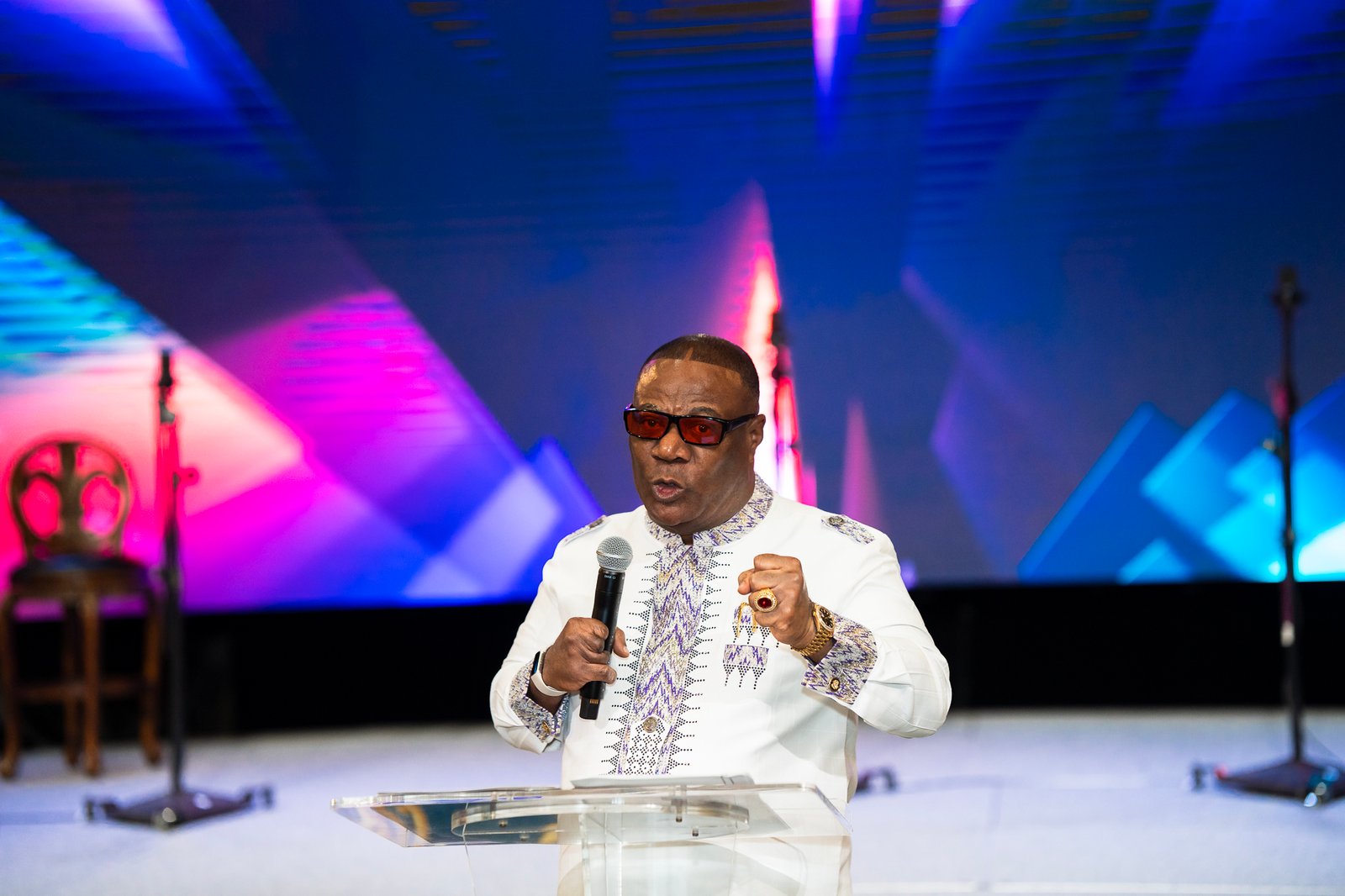
In this essay, I interrogate a troubling norm that has taken root within Ghanaian society: the widespread belief that corporate pastors are above critique and thus entitled to subject the public to unfiltered absurdities (Asamoah-Gyadu, 2015; Gifford, 2015). To borrow from an African proverb, “A mouth that roams restlessly for divisive messages only succeeds in rendering its messenger juvenile” (Owusu-Ansah, 2019, p. 42). This wisdom is timely, as the nation has recently witnessed certain high-profile pastors—Archbishop Nicholas Duncan-Williams, to name one, who operates as a politician by every measure—openly exploit the freedoms of speech and expression (Okyerefo, 2020; BBC News, 2023). Such actions are not only unbecoming of spiritual leadership but also erode the standards of maturity and integrity that public discourse demands (Gyekye, 2003).
What, indeed, is new about the barrage of fantastical claims from Archbishop Duncan-Williams? The nation once heard him promise, without result, to “arrest the United States” through prayer and fasting (Daily Graphic, 2022). More recently, he proclaimed that he died and visited heaven—a narrative that would be met with skepticism elsewhere but is readily consumed in a society discouraged from questioning esoteric statements simply because their author bears the title “Man of God” (Quayesi-Amakye, 2016). This label, regrettably, has become a shield against legitimate criticism (Gifford, 2015).
Today, national headlines quote Archbishop Duncan-Williams claiming, “The National Cathedral was not built, and it was not because of corruption,” attributing its failure to flawed vision rather than accountability, all while the country faces stark economic hardship (MyJoyOnline, 2024; GhanaWeb, 2024). Was Archbishop Duncan-Williams a board member overseeing the cathedral’s construction? Did he serve without compensation or privilege? Such questions deserve answers. It is time to call Archbishop Duncan-Williams what he is: a noisy politician, fluent in the art of obfuscation, who cloaks himself in spiritual authority while speaking a language largely unintelligible to his own flock (Asamoah-Gyadu, 2015). This conduct demands scholarly scrutiny and a public willing to challenge those who wield religious influence for personal or political gain (Okyerefo, 2020).
Archbishop Duncan-Williams’s assertion that corruption played no role in the state’s inability to build the national cathedral simply because he “was [right] there” is logically untenable and intellectually shallow. This line of reasoning is akin to claiming privileged insight into the archbishop’s character merely because of casual greetings at a local food joint—a standard that would not withstand scrutiny in any serious debate (Ayittey, 2006). Accepting such statements as incontrovertible evidence would signal a dangerous abdication of critical citizenship and public accountability (Gyimah-Boadi, 2000).
More concerning is the archbishop’s penchant for self-promotion, which flourishes in a Ghanaian public sphere marked by excessive deference to authority—a cultural habit that, as scholars have observed, perpetuates elite impunity and stifles dissent (Anarfi & Osei, 2017; Boafo-Arthur, 2001). For years, Archbishop Duncan-Williams and his cohort have exploited the nation’s reluctance to challenge their narratives, manipulating both the faithful and political leaders through rhetoric that withers under even modest critical examination (Nukunya, 2003). A mature democracy requires citizens and civil society to rigorously question such self-serving proclamations, irrespective of the speaker’s social or ecclesiastical status. Anything less falls short of the intellectual and civic responsibility that Ghana so desperately needs.
By hastily dismissing “corruption” as the main reason for the cathedral’s incompletion, Archbishop Duncan-Williams positions himself as a paragon of virtue, distinct from the so-called “basket of deplorables” among clergy. This rhetorical maneuver, in which corruption is defined solely as financial theft, is both reductive and evasive (Ayee, 2016). The reality is that corruption manifests in more insidious forms—cronyism, lack of transparency, and dereliction of fiduciary duty (Amundsen, 2019; Appiah, 2017).
A pressing question remains: Did Archbishop Duncan-Williams receive any remuneration, stipends, or sitting allowances as a board member? Transparency about such benefits is essential for public trust (Mensah & Adu-Gyamfi, 2020). Overseeing a project that, after years, has produced little more than a stagnant pool, despite substantial state and stakeholder investment, raises serious questions about stewardship, accountability, and integrity (Gyamera & Kumi, 2015). The archbishop’s posture betrays a self-serving agenda masked by claims of spiritual asceticism—a classic case of performative virtue rather than genuine servant leadership (Ninsin, 2012). Robust public discourse must demand answers from those in positions of religious and civic trust, particularly when public resources are at stake (Quartey, 2021). Only then can Ghana advance toward true accountability and transparency.
By attributing the failed ambitions of the cathedral’s board—of which he was a prominent member—to a supposed lack of seriousness and commitment among Christians, and by extension, all Ghanaians, Archbishop Duncan-Williams firmly positions himself as a disciple of colonial narratives, anthropological reductionism, and orientalist tropes. This rhetorical maneuver not only denigrates his own nation and people but also serves, quite transparently, to inflate his own stature at their expense—a textbook case of internalized elitism masquerading as prophetic rebuke (Adjei, 2019; Said, 1978).
In his eagerness to cast blame outward, the archbishop fails to recognize that every accusatory finger extended toward others leaves the remaining fingers pointed squarely back at himself. His invocation of “the kingdom”—presumably the Kingdom of God—demands scrutiny: What tangible efforts has Archbishop Duncan-Williams made to help his congregation genuinely access this kingdom? Instead, the public witnesses garish displays of wealth, ostentatious church performances, and a relentless emphasis on offerings from a congregation more fearful than spiritually uplifted (De Witte, 2003; Meyer, 2004).
Is Archbishop Duncan-Williams prepared to relinquish his earthly kingdom—the vast properties, the Accra empire, and the privileges that set him apart—and humbly walk in the shoes of the marginalized, as the Gospels require? The answer is self-evident. Until such humility is demonstrated, his admonishments ring hollow—a reflection of self-serving religiosity rather than authentic servant leadership (Gifford, 2004; Asamoah-Gyadu, 2021).
To label Ghanaians as a “bunch of selfish [and] greedy people” is not only an example of wild generalization but also emblematic of Archbishop Duncan-Williams’s holier-than-thou posture (Abraham, 2015). Beneath this veneer of moral superiority lies a calculated attempt to frame himself as a revolutionary untouched by society’s moral shortcomings—a claim that does not withstand historical scrutiny. In reality, the archbishop owes much of his rise to the patronage of the Provisional National Defence Council (PNDC) under Jerry John Rawlings, benefiting from state largesse and connections rather than entrepreneurial or spiritual merit (Ayee, 2016; Okyerefo, 2011).
Drawing on Marx’s critique, it is evident that many charismatic churches in Ghana function as arenas of exploitation (Marx, 1976/1844; Okyerefo, 2011). These leaders, masquerading as divine intermediaries, perpetuate a cycle of dependence and subservience, leveraging the credulity and unquestioning loyalty of their congregations for personal gain (Okyerefo, 2011). Rather than empowering their followers toward critical consciousness or social transformation, figures like Archbishop Duncan-Williams cast blame on the very people they exploit, all while performing a theatrical brand of religion that borders on comedy and insult. In the words of Marx, “Religion is the opiate of the masses” (Marx, 1976/1844). The congregation, rather than seeking liberation from their oppressors, is lulled into complacency—mistaking empty spectacle for spiritual nourishment, and the noise of the charlatan for the voice of God.
References
Abraham, W. E. (2015). The mind of Africa. East African Publishing House.
Anarfi, J. K., & Osei, M. (2017). Leadership and accountability in Ghanaian public life: Cultural constraints and democratic challenges. African Studies Review, 60(3), 56-76.
Adjei, M. (2019). Elite discourse and the politics of blame in Ghanaian public life. Contemporary African Studies, 37(2), 110-128.
Amundsen, I. (2019). Political corruption in Africa: Extraction and power preservation. U4 Anti-Corruption Resource Centre.
Appiah, K. A. (2017). The Lies That Bind: Rethinking Identity. Liveright Publishing.
Asamoah-Gyadu, J. K. (2021). Spiritus contra spiritum: Pentecostalism and religious encounter in Ghana. Brill.
Asamoah-Gyadu, J. K. (2015). Sighs and Signs of the Spirit: Ghanaian Perspectives on Pentecostalism and Renewal in Africa. Regnum Books International.
Ayee, J. R. A. (2016). Political corruption in Ghana: Are the institutions of state up to the task? African Studies Review, 59(2), 89-112.
Ayittey, G. B. N. (2006). Africa Unchained: The Blueprint for Africa’s Future. Palgrave Macmillan.
BBC News. (2023, June 25). Ghana’s religious leaders and political influence. https://www.bbc.com/news/world-africa-66015437
Boafo-Arthur, K. (2001). Chieftaincy and politics in Ghana since 1982. West Africa Review, 3(2), 1-25.
Daily Graphic. (2022, August 10). Pastor Duncan-Williams’ promise to arrest the United States through prayer. https://www.graphic.com.gh/news/general-news/pastor-duncan-williams-arrest-united-states.html
De Witte, M. (2003). Altar media’s living word: Televised charismatic Christianity in Ghana. Journal of Religion in Africa, 33(2), 172-202.
GhanaWeb. (2024, March 12). National Cathedral project and the controversies. https://www.ghanaweb.com/GhanaHomePage/NewsArchive/National-Cathedral-project-controversies-1728344
Gifford, P. (2004). Ghana’s new Christianity: Pentecostalism in a globalizing African economy. Hurst & Company.
Gifford, P. (2015). Christianity, Development and Modernity in Africa. Hurst & Company.
Gyamera, G. O., & Kumi, E. (2015). Public accountability failures in Ghana: Evidence and implications. African Journal of Public Affairs, 8(2), 78-93.
Gyekye, K. (2003). African Cultural Values: An Introduction. Sankofa Publishing Company.
Gyimah-Boadi, E. (2000). Anti-corruption in Ghana: Challenges and prospects. Corruption and Development in Africa, 227-245.
Marx, K. (1976). Critique of Hegel’s Philosophy of Right (J. O’Malley, Trans.). Cambridge University Press. (Original work published 1844)
Mensah, J. V., & Adu-Gyamfi, E. (2020). Transparency and trust in Ghanaian public institutions. Journal of African Governance, 7(1), 34-52.
Meyer, B. (2004). Christianity in Africa: From African independent to Pentecostal-charismatic churches. Annual Review of Anthropology, 33, 447-474.
MyJoyOnline. (2024, March 15). National Cathedral not built: Archbishop Duncan-Williams blames flawed vision. https://www.myjoyonline.com/national-cathedral-not-built-archbishop-duncan-williams-blames-vision/
Ninsin, K. A. (2012). The Quest for Democracy in Africa: The Ghanaian Experience. Ghana Social Science Journal, 9(1), 1-20.
Nukunya, G. K. (2003). Tradition and Change in Ghana: An Introduction to Sociology. Ghana Universities Press.
Okyerefo, M. P. K. (2020). The public role of religious leaders in Ghana: A sociological perspective. Ghana Social Science Journal, 17(1), 35-49.
Okyerefo, M. P. K. (2011). The gospel of public image: Pentecostalism and social change in Ghana. Society, Religion and Technology, 2(1), 45-62.
Owusu-Ansah, D. (2019). African Proverbs and Wisdom: A Collection for Reflection and Inspiration. Wisdom Press.
Said, E. W. (1978). Orientalism. Pantheon Books.
Quartey, K. (2021). Accountability and transparency in Ghana’s public sector. International Journal of Public Administration, 44(5), 401-415.
Quayesi-Amakye, J. (2016). Prophets and prophecy in contemporary Ghanaian Christianity. Studies in World Christianity, 22(2), 123-140.
