
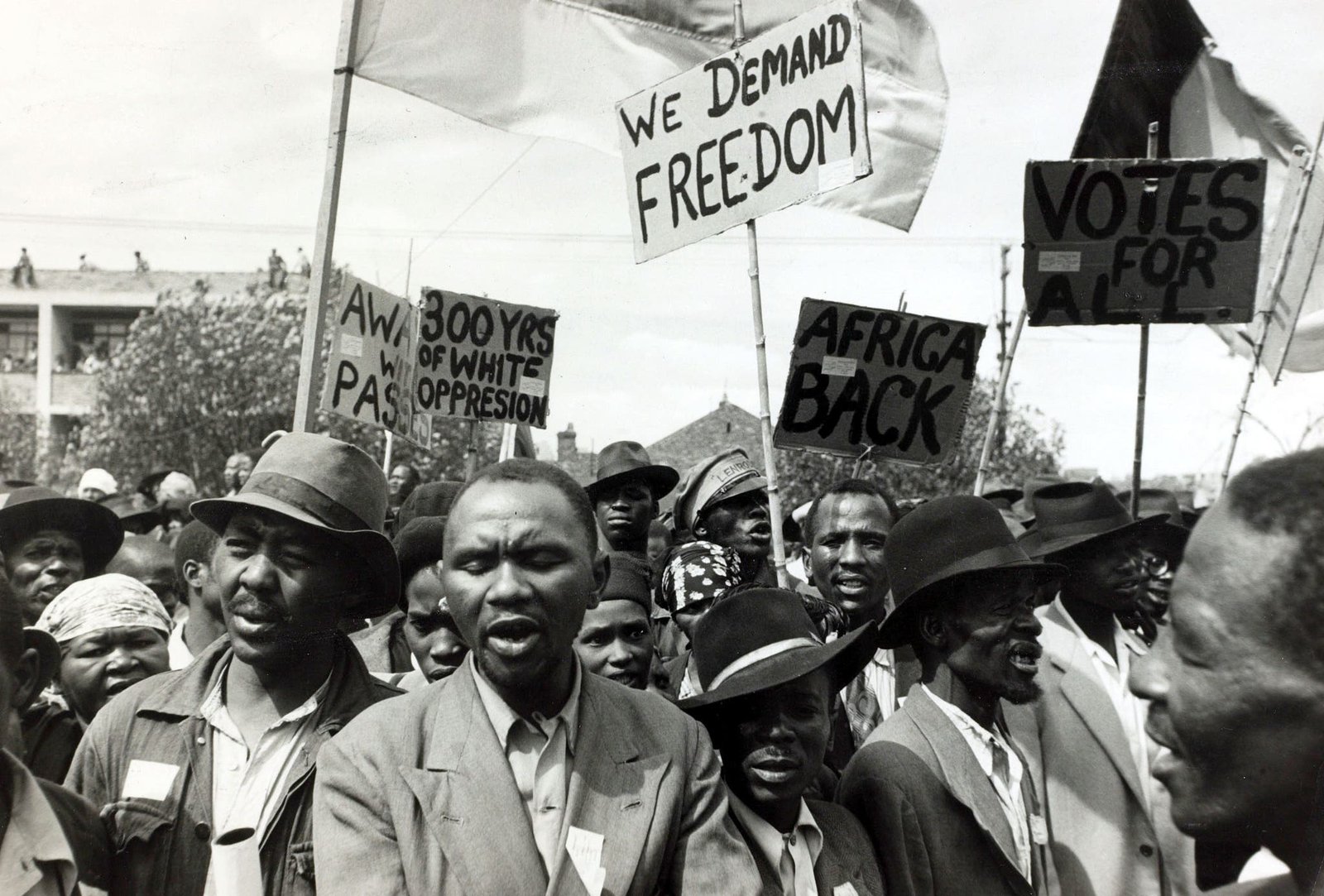
Taking a spiritual and emotional hiatus from one’s homeland, only to return and confront its transformation, is not merely a personal journey but a civic duty. For many Black South Africans, the seismic social and economic shifts since 1994 have produced deep inner conflict and a persistent struggle for belonging (Ramphele, 1999; Mngxitama, Alexander, & Gibson, 2008). These tensions are acutely visible in South Africa, where some members of Gen Z openly express troubling nostalgia for Apartheid—a system defined by institutionalized violence and Black oppression (Posel, 2001; Mamdani, 1996). Such misplaced affection exposes the complexities of identity and adaptation in a society still grappling with its colonial and racist legacy.
This paper critically examines statements by figures such as Ike Khumalo, who has recently—and erroneously—claimed that Black life under Apartheid, a regime aptly characterized as a “killing machine” (Lodge, 1983), was better than under the leadership of President Cyril Ramaphosa or Nelson Mandela. Such revisionism not only trivializes the suffering and deaths of countless Black South Africans under racist laws justified by the rhetoric of “national security” (Posel, 2001), but also risks distorting historical truth and undermining the critical work of justice and reconciliation in post-Apartheid South Africa (Mamdani, 1996). Claims that life was better under Apartheid invert the realities of Black oppression and demand rigorous, evidence-based scrutiny
This paper does not serve as a mouthpiece for the African National Congress (ANC), nor do I seek to excuse the government’s policy failures or the external pressures it faces; the ANC is fully capable of defending its record (Southall, 2013). Nor is my aim to gloss over the real grievances and disappointments of post-apartheid South Africa. Rather, I highlight how White beneficiaries of apartheid, often through powerful corporate media, have strategically courted disillusioned victims like Ike Khumalo—positioning themselves as saviours while exploiting legitimate Black frustrations with the Ramaphosa government (Duncan, 2016; Madonsela, 2019). The ANC bears partial responsibility for this, having failed to adequately address the roots of public discontent.
While I understand the Black nostalgia for the Apartheid era—given South Africa’s post-1994 decline into high unemployment, rampant violence, theft, and deepening misery in townships like Mofolo (Soweto), Alexandra, Khayelitsha, and Langa (Seekings & Nattrass, 2005; Ramphele, 2012)—to dismiss the significance of Black freedom under Nelson Mandela and his successors is a profound affront to the memory of those who sacrificed their lives for liberation, including Robert Mangaliso Sobukwe, Steve Bantu Biko, and Chris Hani (Alexander, 2002; Pogrund, 1990). Such revisionism not only distorts history but dishonours the legacy of South Africa’s freedom struggle.
In this paper, I draw on Dr. Camara Phyllis Jones’s framework—specifically, her analysis of internalized racism (Jones, 2000)—to explain why victims of systemic oppression, after enduring protracted disappointment, often blame themselves for their suffering. This framework clarifies how individuals like Ike Khumalo can flippantly portray Apartheid as a beacon of hope for Black South Africans, despite overwhelming evidence of its brutality, while dismissing the difficult but real interventions made by post-apartheid governments (Seekings & Nattrass, 2005). I also examine policy strategies that could help the government rebuild trust and foster nuanced public understanding of South Africa’s challenges. This paper is not an indictment of any individual in the Ramaphosa administration, but an invitation to Socratic dialogue about government missteps that provoke nostalgia for a racist system designed to oppress and exclude Black South Africans.
In race-conscious societies like South Africa, racism is rooted in unequal power relations, historically privileging White South Africans over Black citizens (Steyn, 2001). Under Apartheid, and persisting in subtler forms today, Whites have wielded the power to deny Blacks access to jobs, housing, and opportunity with little recourse (Seekings & Nattrass, 2005). For example, Black South Africans are still excluded from towns like Orania, and the abolition of legal segregation has shifted into financial segregation—where exorbitant property prices and White reluctance to sell perpetuate racial exclusion (Christopher, 2005). Lighter skin offers no shield; anti-Black racism continues to shape daily life in post-Apartheid South Africa (Durrheim et al., 2011).
Dr. Camara Phyllis Jones asserts that racism is sustained through the dialectical relationship between dominant (White) and subordinate (Black) groups; in South Africa, this dynamic has led to the internalization of White supremacy among some Black South Africans (Jones, 2000). Such internalization manifests as learned helplessness, fueling claims like Ike Khumalo’s assertion that Apartheid was preferable to Black rule, or Vusi Thembekwayo’s praise of Apartheid-era law enforcement as “efficient”—statements that dangerously overlook the systematic brutality and lethal violence inflicted on Black communities under the guise of “national security” (Posel, 2001; Lodge, 1983).
Jones (2000a; 2000b) delineates three levels of racism: institutionalized, personally mediated, and internalized. This paper focuses on internalized racism, as exemplified by Ike Khumalo and those Black South Africans who believe life was better under Apartheid. Internalized racism emerges when Black South Africans, shaped by deep-seated stereotypes, attribute present challenges to supposed deficiencies in Black leadership, rather than to enduring institutional legacies of Apartheid or larger structural pressures such as global economic constraints and population growth (Alexander, 2002; Terreblanche, 2005).
According to Jones (2000), internalized racism mirrors the Stockholm syndrome: victims adopt stigmatizing labels and question their own abilities and worth, accepting the myth of Black inferiority and governmental failure (Jones, 2020a, p. 8). This self-deprecation leads to misplaced nostalgia for Apartheid—a regime that violently suppressed Black autonomy to sustain White supremacy (Worden, 2012). Instead of recognizing external and internal challenges confronting the ANC government, these individuals embrace learned helplessness and view emulation of Whiteness as the only solution. This dynamic is starkly illustrated by the Democratic Alliance’s 2024 electoral gains—a party whose lineage traces directly to Apartheid’s National Party (Chipkin, 2007; Southall, 2024). Such political shifts signal both the ANC’s waning influence and the electorate’s deepening disillusionment with post-Apartheid governance.
Addressing Black South Africans’ frustration and disillusionment with the ANC demands that the Ramaphosa administration, and those that follow, abandon elitist detachment and meaningfully re-engage an electorate traumatized by Apartheid and now disappointed by unfulfilled promises (Friedman, 2015; Gumede, 2021). Engagement must transcend symbolic gestures and revolutionary rhetoric, focusing on concrete solutions: employment, security, and tangible improvements in daily life (Seekings & Nattrass, 2005). Policy must be reimagined, appointing technocrats with proven records in economic management and job creation (Southall, 2016). Corruption—real or perceived—must be independently investigated and prosecuted to restore public trust (Butler, 2017).
Strategic investment in youth education, vocational training, and apprenticeships is essential, particularly for marginalized communities most alienated from opportunity (Spaull, 2013). The ANC’s recent electoral setbacks and voices like Ike Khumalo’s are not mere complaints but urgent warnings: unless the government delivers real change, nostalgia for Apartheid’s “order” will grow, and support for the ANC will continue to erode. Khumalo’s remarks are not hatred—they are a desperate call for substantive reform. To dismiss them as isolated grumblings is to ignore the electorate’s ultimatum: fix the country or face removal at the ballot box.
References
Alexander, N. (2002). An Ordinary Country: Issues in the Transition from Apartheid to Democracy in South Africa. University of Natal Press.
Butler, A. (2017). Contemporary South Africa (3rd ed.). Palgrave Macmillan.
Chipkin, I. (2007). Do South Africans Exist? Nationalism, Democracy and the Identity of ‘the People’. Wits University Press.
Christopher, A. J. (2005). The slow pace of desegregation in South African cities, 1996–2001. Urban Studies, 42(8), 1485-1500.
Durrheim, K., Mtose, X., & Brown, L. (2011). Race Trouble: Race, Identity and Inequality in Post-Apartheid South Africa. Lexington Books.
Friedman, S. (2015). Race, Class and Power: Harold Wolpe and the Radical Critique of Apartheid. University of KwaZulu-Natal Press.
Gumede, W. (2021). South Africa’s ANC at a crossroads. Journal of Democracy, 32(3), 80-94.
Jones, C. P. (2020b). Toward the science and practice of anti-racism: Launching a national campaign against racism. Ethnicity & Disease, 30(Suppl 1), 7–12.
Jones, C. P. (2000a). Levels of racism: A theoretic framework and a gardener’s tale. American Journal of Public Health, 90(8), 1212–1215.
Lodge, T. (1983). Black Politics in South Africa since 1945. Longman.
Mamdani, M. (1996). Citizen and Subject: Contemporary Africa and the Legacy of Late Colonialism. Princeton University Press.
Mngxitama, A., Alexander, A., & Gibson, N. C. (2008). Biko Lives!: Contesting the Legacies of Steve Biko. Palgrave Macmillan.
Pogrund, B. (1990). How Can Man Die Better: The Life of Robert Sobukwe. Jonathan Ball Publishers.
Posel, D. (2001). Race as common sense: Racial classification in twentieth-century South Africa. African Studies Review, 44(2), 87-113.
Ramphele, M. (2012). Conversations with My Sons and Daughters. Penguin.
Ramphele, M. (1999). Mamphela Ramphele: Across Boundaries—The Journey of a South African Woman Leader. The Feminist Press.
Seekings, J., & Nattrass, N. (2005). Class, Race, and Inequality in South Africa. Yale University Press.
Southall, R. (2024). The Government of National Unity: South Africa’s 2024 Elections and Aftermath. Transformation: Critical Perspectives on Southern Africa, 106, 1–18.
Southall, R. (2016). The New Black Middle Class in South Africa. Jacana.
Spaull, N. (2013). South Africa’s education crisis: The quality of education in South Africa 1994–2011. Centre for Development and Enterprise Report, 1-65.
Steyn, M. (2001). Whiteness Just Isn’t What it Used to Be: White Identity in a Changing South Africa. SUNY Press.
Terreblanche, S. (2005). A History of Inequality in South Africa: 1652–2002. University of KwaZulu-Natal Press.
Worden, N. (2012). The Making of Modern South Africa: Conquest, Apartheid, Democracy (5th ed.). Wiley-Blackwell.
