
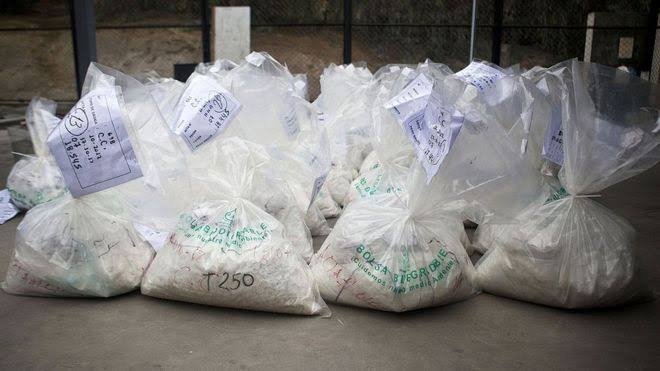
In this paper, I take a polemical stance to expose the absurdity and danger of narco-politics in Ghana, fueled by whataboutism and false moral equivalency over which government—National Democratic Congress (NDC) or New Patriotic Party (NPP)—interdicted more cocaine shipments (Daily Graphic, 2023; Citi Newsroom, 2024). This political theatre, perpetuated by politicians addicted to reckless, juvenile rhetoric, has turned Ghanaian politics into a comic farce. Politicians, well-compensated and privileged, trivialize grave national threats by reducing the cocaine crisis to partisan scorekeeping, while the true cancer—unchecked drug trafficking—remains untreated and metastasizes (Boateng, 2022; Owusu, 2020).
This paper is not a defence of any party; both the NDC and NPP have delivered mediocre results and bear collective blame. The spectacle of lawmakers rationalizing the indefensible and engaging in childish blame games is not only reprehensible, it is a betrayal of public trust and legislative responsibility (Gyimah-Boadi & Prempeh, 2012). Ghana’s descent into narco-politics is a terminal threat demanding radical policy intervention, not the hollow soundbites of self-serving politicians.
In September 2026, South Dayi Member of Parliament Rockson-Nelson Dafeamekpor ignited controversy with his X (formerly Twitter) post: “NPP cannot win cocaine debate in Ghana” (JoyOnline, 2026). His statement exposed a disturbing trend—political elites from both the NDC and NPP locked in a grotesque contest over which party is least complicit in Ghana’s burgeoning cocaine trade. Dafeamekpor cataloged cocaine interceptions from 2017 to 2024 under the Akufo-Addo administration and cited a 2009 U.S. Department of State report labelling Ghana a major transshipment hub for cocaine and heroin (US Department of State, 2009; MyJoyOnline, 2026).
Dafeamekpor’s rhetoric is emblematic of a political class schooled in neocolonial blame-shifting, eager to weaponize international reports for partisan gain while absolving themselves of responsibility. Dafeamekpor’s call for a “national approach” to drug trafficking rings hollow; the real scandal is that both parties have used the drug crisis as a political football, rather than formulating radical, coordinated policy responses (Aning & Kwarkye, 2022; Alhassan & Tankebe, 2021). Until politicians abandon self-serving games and confront the narco-menace head-on, Ghana’s international reputation and internal stability will remain at risk.
Continuing this pattern of partisan amnesia, Dafeamekpor’s sanctimonious statements reek of hypocrisy. Like so many of his colleagues—whom the late Flt. Lt. Jerry John Rawlings famously dubbed “babies with sharp teeth” for their unruly, partisan attacks—Dafeamekpor is quick to condemn the NPP but silent on his own party’s failures (Graphic Online, 2018; Modern Ghana, 2021). While in opposition, he and his peers—Sammy Gyamfi, Felix Ofosu-Kwakye, Sam Nartey George—relentlessly attacked Nana Akufo-Addo’s administration, often with allegations rooted in political mischief and slander (Citi Newsroom, 2023).
Yet, since the NDC took office in January 2025, Ghana’s status as a cocaine hub remains unchanged. Dafeamekpor and his cohort of partisan apologists have either lapsed into silence or twisted narratives to shirk responsibility, exposing a profound deficit in political integrity and public accountability. (Daily Guide Network, 2014; Modern Ghana, 2021). Dafeamekpor’s current stance is a transparent attempt to deflect from the NDC’s own complicity in the transshipment of narcotics through Ghana, exposing the bipartisan rot at the core of Ghana’s narco-politics (Aning & Kwarkye, 2022). Such selective outrage and rhetorical gymnastics do nothing to address the systemic failures enabling Ghana’s descent into a trafficking hotspot.
This brings us to a fundamental question for Dafeamekpor and his ilk: Why did the electorate oust Akufo-Addo’s government? The prevailing assumption was that returning the NDC to power offered a superior alternative. Yet this belief is tenuous, given Ghana’s continued drift and the enduring cocaine crisis (JoyNews, 2024; Citi Newsroom, 2023). Dafeamekpor’s whataboutism and appeals to moral equivalency are intellectually bankrupt, akin to a serial killer arguing mitigation because his crimes are marginally fewer or less gruesome than another’s (Aning & Kwarkye, 2022; Modern Ghana, 2021). The central issue is not which party presided over more drug seizures or trafficking scandals; it is that both parties have presided over systemic rot and remain complicit in Ghana’s narco-politics. This bipartisan complicity is a public menace, demanding condemnation—not partisan point-scoring.
The party of Rawlings, once a beacon of hope and discipline despite its own human rights failings, has devolved into a clique of self-satisfied elites obsessed with status and style—mistaking privilege for competence, while the critical public sees through the charade (Graphic Online, 2022; Gyampo, 2021). The NDC must urgently reclaim its revolutionary legacy: genuine public service and an unyielding stance against crime, as Rawlings once embodied in his relentless crackdown on financial corruption and violent crime during the PNDC era (Gyimah-Boadi & Prempeh, 2012; Aning, 2016).
Until the NDC rediscovers fiscal discipline, frugality, and the courage to confront the drug menace with real resolve, it stands indistinguishable from the NPP it so loudly condemns. Dafeamekpor and his colleagues’ opportunistic appeals to public sentiment, especially when under scrutiny, are symptomatic of a party that has lost its way and now panders to narco-interests (Daily Guide Network, 2023; Aning & Kwarkye, 2022). Public confidence in Ghanaian leadership is eroding; if this trajectory continues, the consequences will be dire for the country’s stability and sovereignty.
References
Aning, K. (2016). Organized crime in West Africa: Options for response. Kofi Annan International Peacekeeping Training Centre Policy Brief, 8, 1-6.
Aning, K., & Kwarkye, S. (2022). Ghana’s struggle with drug trafficking: The challenges of enforcement and governance. African Security Review, 31(1), 46-60.
Alhassan, S., & Tankebe, J. (2021). Corruption, trust, and criminal justice in Ghana. International Journal of Law, Crime and Justice, 66, 100497.
Boateng, F. D. (2022). Corruption and law enforcement in Ghana: Implications for security and justice. International Journal of Law, Crime and Justice, 70, 100514.
Citi Newsroom. (2024, February 28). Ghana ranked among top West African countries for cocaine trafficking. https://citinewsroom.com/2024/02/ghana-ranked-among-top-west-african-countries-for-cocaine-trafficking/
Citi Newsroom. (2023, November 9). NDC, NPP trade jabs over cocaine seizures. https://citinewsroom.com/2023/11/ndc-npp-trade-jabs-over-cocaine-seizures/
Daily Graphic. (2023, November 14). Political parties trade blame over cocaine seizures. https://www.graphic.com.gh/news/politics/political-parties-trade-blame-over-cocaine-seizures.html
Graphic Online. (2022, November 2). Public confidence in political parties waning. https://www.graphic.com.gh/news/politics/public-confidence-in-political-parties-waning.html
Daily Guide Network. (2023, March 5). NDC, NPP: Which party is really fighting drugs? https://dailyguidenetwork.com/ndc-npp-which-party-is-really-fighting-drugs/
Gyampo, R. (2021). Political leadership and the decline of public trust. Ghana Journal of Politics, 12, 88-104.
Gyimah-Boadi, E., & Prempeh, H. K. (2012). Oil, politics, and Ghana’s emerging democracy. Journal of Democracy, 23(3), 94-108.
JoyOnline. (2026, September 5). NPP cannot win cocaine debate in Ghana – Dafeamekpor. https://www.myjoyonline.com/npp-cannot-win-cocaine-debate-in-ghana-dafeamekpor
JoyNews. (2024, January 15). Why voters rejected Akufo-Addo’s government. https://www.myjoyonline.com/why-voters-rejected-akufo-addos-government/
MyJoyOnline. (2026, September 6). NDC, NPP trade blame over drug trafficking claims. https://www.myjoyonline.com/ndc-npp-trade-blame-over-drug-trafficking-claims
Modern Ghana. (2021, October 15). Ghana’s cocaine politics: A tale of hypocrisy. https://www.modernghana.com/news/1111245/ghanas-cocaine-politics-a-tale-of-hypocrisy.html
Owusu, G. (2020). The politics of crime and security in Ghana: Understanding the role of the state. African Affairs, 119(475), 41-63.
US Department of State. (2009). International Narcotics Control Strategy Report, Vol. 1: Drug and Chemical Control. https://2009-2017.state.gov/j/inl/rls/nrcrpt/2009/vol1/index.htm
