
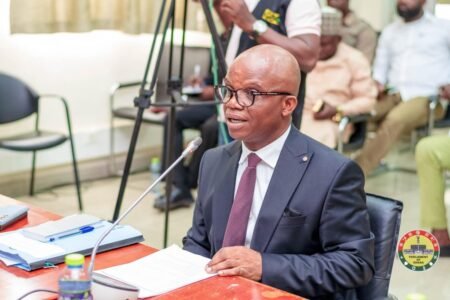
The New Patriotic Party (NPP) has mastered the art of hollow slogans—branding itself as “technocratic,” “doyens of democracy,” “property-owning” millionaires, “God-fearing,” and “law-abiding,” yet consistently failing to explain or substantiate these claims (Gyampo, 2021; Boafo-Arthur, 2007). The party’s recent rhetoric—exemplified by Dr. Stephen Amoah (“Sticka”) declaring, “‘I will sack every NDC member from my constituency if I am wrongly arrested’”—is a case study in political recklessness (Daily Graphic, 2024). Such threats are not just divisive; they stoke ethnic and partisan tensions, undermining national security and the rule of law (Arthur, 2015; Osei, 2017).
Let’s be clear: the NPP has contributed to Ghana’s democratic experiment, but its addiction to overpromising and underdelivering is legendary—whether promising to “arrest the dollar,” clean up Accra, or reform the Ghana Police Service, only to leave the capital drowning in filth and the police under-resourced and politicized (Gyimah-Boadi & Prempeh, 2012; Transparency International, 2022). Senior officers luxuriate in political patronage while frontline law enforcement is left toothless, shifting the burden onto crime victims.
Dr. Amoah’s schizophrenic outbursts reflect a deeper malaise: a political culture that tolerates, even rewards, incendiary language and impunity at the expense of national cohesion (Gyampo, 2021; Osei, 2017). Such rhetoric must be unequivocally condemned—if Ghana is to avoid spiralling into violence and dysfunction.
On 3 October 2026, during an appearance on Owia TV, Dr. Stephen Amoah (Sticka), MP for Nhyiaeso, shamelessly hijacked the discourse on the failed arrest of his colleague, Nana Agyei Baffour Awuah, by EOCO—a debacle that drew sharp criticism from human rights advocates, including Martin Kpebu (Daily Graphic, 2026; Joy News, 2026). Rather than address the core issue of due process and abuse of state power, Amoah narcissistically redirected attention to himself, a hallmark of his political persona (Gyampo, 2021; Arthur, 2015).
Such self-aggrandizing theatrics typify the toxic individualism and ego-driven politics plaguing Ghana’s Fourth Republic, where politicians, desperate for relevance, routinely exploit national crises for personal gain (Osei, 2017; Modern Ghana, 2026). Amoah’s conduct is not merely unbecoming; it is symptomatic of a broader malaise—an elite culture more invested in self-promotion than public service or democratic accountability.
In a characteristic display, Amoah defiantly declared, “If the NDC wants, they should arrest me. If I am arrested after committing an offence, I am okay. But if I do not commit an offence and I am arrested, after my release, Ghanaians will see what will happen” (GhanaWeb, 2026). Such rhetoric, especially from a legislator, is not only reckless but borders on criminal incitement. No serious democracy would tolerate a lawmaker threatening national stability in retaliation for lawful arrest (Gyimah-Boadi, 2017; Arthur, 2015).
Amoah must remember that the NDC, as the party in government, is constitutionally mandated to safeguard public order (Constitution of Ghana, 1992, Art. 12). His threats undermine the very rule of law he is sworn to uphold and expose a culture of elite impunity where politicians, shielded by privilege and immunity, resort to jungle justice while preaching peaceful legal resolution to the masses (Ayee, 2020; Boafo-Arthur, 2007).
Such behaviour perpetuates the colonial stereotype of African leaders as lawless and unfit for self-governance—a narrative weaponized by figures like Donald Trump to disparage Africa globally (BBC News, 2018). Until Ghanaian elites are held accountable to the constitution, the nation will remain shackled by the weight of external contempt and internal dysfunction.
During a panel discussion, Amoah declared, “every NDC member will leave the place [his constituency]. I swear by the God I serve, if you arrest me for no offence” (GhanaWeb, 2026). Such inflammatory rhetoric is not just reckless—it undermines the very foundation of Ghana’s constitutional order. Amoah would do well to process his thoughts in his mother tongue before releasing such crude threats; the English language, in this context, only amplifies his lack of self-restraint (Arthur, 2015; Gyimah-Boadi, 2017).
Amoah must be reminded: his constituency is not his personal estate, and Ghana is a republic governed by the rule of law. The Constitution explicitly guarantees freedom of movement and residence to all citizens (Constitution of Ghana, 1992, Art. 21). As a doctoral holder, Amoah should know that higher education demands critical reflection and sober judgment, not incendiary, ethnically charged outbursts (Boafo-Arthur, 2007; Osei, 2017). Weaponizing politics with threats and ethnic undertones corrodes democracy and betrays the responsibilities of public office.
What is most alarming about Amoah’s incendiary threats is the complicit silence from his party, especially Kennedy Agyapong, notorious for ad hominem assaults and calls for ethnic violence (Gyampo, 2021; Daily Graphic, 2023). Equally damning is the lack of condemnation from Ghana’s churches, pastors, and the National Peace Council—institutions that routinely invoke God’s name but conveniently “miss” such abuses when it serves their interests (Osei, 2017; GhanaWeb, 2026). The defence that they did not hear the invocation of God’s name in vain is intellectually dishonest.
Most politicians and pastors in Ghana are not the moral paragons they claim to be. Instead, they function as enablers—by action or omission—of the nation’s culture of insult and impunity (Arthur, 2015; Modern Ghana, 2024). The charismatic and prophetic clergy, many of whom profited handsomely under the PNDC and subsequent governments, operate much like a Ghanaian Sicilian Mafia. So-called “spiritual fathers” such as Nicholas Duncan-Williams, Mensah Otabil, Sam Korankye Ankrah, Charles Agyin Asare, and Dag Heward-Mills wield immense political and economic influence under the guise of spiritual leadership, while exporting religion and amassing wealth at the expense of their congregations (Asamoah-Gyadu, 2015; BBC News, 2019).
Amoah’s reckless threats are not isolated incidents—they are harbingers of greater danger for an already fragile nation. Tolerating such incendiary rhetoric from a Member of Parliament, rather than enforcing constitutional and penal provisions, signals a perilous willingness to forsake justice for political convenience (Gyimah-Boadi, 2017; Arthur, 2015). History is replete with warnings: the lead-up to the Rwandan genocide saw politicians like Léon Mugesera and Colonel Théoneste Bagosora weaponize hate speech and media to ignite ethnic violence, resulting in nearly a million deaths while the world looked away (Des Forges, 1999; Straus, 2006).
Ghana must heed these lessons. The failure to hold leaders like Amoah accountable—regardless of status—invites the erosion of civic order and opens the door to xenophobia and mass violence. The law must act decisively, not only for justice but as a stark deterrent to those who would exploit democracy’s freedoms to incite division (Transparency International, 2022; Daily Graphic, 2023). In a nation where every citizen’s fate is interlinked, the time to act is now. Letting a stitch save nine is far better than losing all to complacency.
References
Arthur, J. (2015). Political corruption and public accountability in Ghana. African Journal of Public Affairs, 8(2), 34-48.
Asamoah-Gyadu, J. K. (2015). Sighs and Signs of the Spirit: Ghanaian Perspectives on Pentecostalism and Renewal in Africa. Regnum Books International.
Ayee, J. R. A. (2020). Political economy of rule of law in Ghana. African Affairs, 119(475), 557-577.
BBC News. (2018, January 12). Trump ‘shithole’ remarks spark outrage across Africa. https://www.bbc.com/news/world-africa-42661049
Boafo-Arthur, K. (2007). Ghana: One Decade of the Liberal State. Zed Books.
Constitution of the Republic of Ghana (1992), Art. 21.
Daily Graphic. (2026, October 4). EOCO’s botched arrest sparks outrage. https://www.graphic.com.gh/news/general-news/eocos-botched-arrest-sparks-outrage.html
Daily Graphic. (2024, May 10). Sticka’s threat sparks controversy in Nhyiaeso. https://www.graphic.com.gh/news/politics/stickas-threat-sparks-controversy-in-nhyiaeso.html
Daily Graphic. (2023, March 21). Kennedy Agyapong under fire for threats and insults.https://www.graphic.com.gh/news/politics/kennedy-agyapong-under-fire-for-threats-and-insults.html
Des Forges, A. (1999). Leave None to Tell the Story: Genocide in Rwanda. Human Rights Watch.
GhanaWeb. (2026, October 8). Churches and Peace Council silent on Amoah’s threats. https://www.ghanaweb.com/GhanaHomePage/NewsArchive/churches-and-peace-council-silent-on-amoahs-threats-2026
GhanaWeb. (2026, October 3). I’ll sack every NDC member if I’m wrongly arrested – Sticka warns. https://www.ghanaweb.com/GhanaHomePage/NewsArchive/Ill-sack-every-NDC-member-if-Im-wrongly-arrested-Sticka-warns-2026
Gyampo, R. (2021). Political leadership and the decline of public trust. Ghana Journal of Politics, 12, 88-104.
Gyimah-Boadi, E. (2017). Corruption in Ghana: Trends, causes, and consequences. Ghana Center for Democratic Development.
Gyimah-Boadi, E., & Prempeh, H. K. (2012). Oil, politics, and Ghana’s emerging democracy. Journal of Democracy, 23(3), 94-108.
Joy News. (2026, October 5). Human rights groups condemn EOCO’s handling of MP’s arrest. https://www.myjoyonline.com/human-rights-groups-condemn-eocos-handling-of-mps-arrest/
Modern Ghana. (2026, October 7). Amoah’s TV tirade: Ego before accountability. https://www.modernghana.com/news/1432571/amoahs-tv-tirade-ego-before-accountability.html
Osei, M. (2017). Gender, media, and politics in Ghana: The case of female politicians. Journal of African Media Studies, 9(2), 265-279.
Straus, S. (2006). The Order of Genocide: Race, Power, and War in Rwanda. Cornell University Press.
Transparency International. (2022). Corruption Perceptions Index 2022: Ghana. https://www.transparency.org/en/cpi/2022/index/gha
