
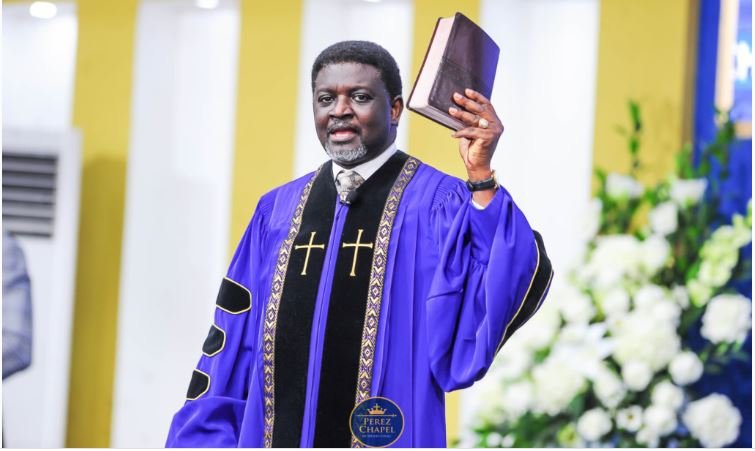
In this essay, I subject Archbishop Charles Agyinasare’s credibility to rigorous scrutiny—not out of malice, but because his public persona masks a troubling opportunism. Under the polished veneer of religiosity, Archbishop Agyinasare exemplifies the archetype of the corporate pastor: a man who aligns himself with prevailing winds, emerging only when it is safe, and remaining conspicuously silent during periods of public vilification and political warfare (Gifford, 2015; Asamoah-Gyadu, 2015). His recent admonition against insulting people for their disability, sexuality, or appearance is hollow, given his tacit approval of divisive campaigns—such as the anti-LGBTQ+ crusade led by Sam Nartey George, an ordained elder of his church (BBC News, 2022).
As a scholar of social and institutional inequities, Archbishop Agyinasare’s belated warnings against bigotry are little more than damage control. One cannot preach exclusionary identity politics one day and claim the mantle of universal humanity the next (Asamoah-Gyadu, 2015; Tamale, 2020). This is not leadership; it is hypocrisy masquerading as piety, and it strips the Archbishop—and his like-minded clergy—of any residual credibility.
On 4 October 2026, Archbishop Charles Agyinasare delivered a sermon titled “Watch Your Words: The Power and Responsibility of Speech,” warning Ghanaians against incendiary rhetoric and the weaponization of disability, sexuality, and family as tools for public degradation. He insisted that all humans are God’s creation and bear His image, admonishing Christians to model self-restraint and reject “foul and unwholesome language” in all discourse (GhanaWeb, 2026). Agyinasare’s assertion—“you can be firm without being vulgar; passionate without becoming abusive; you can expose corruption without insulting people’s humanity”—was a rare call for civility in a political environment rife with abuse and polarization (Gifford, 2015).
He condemned any disagreement that inflames political, ethnic, or religious tension and called on families, churches, the media, and politicians to cultivate civil language. Agyinasare concluded with Proverbs 18:21: “Death and life are in the power of the tongue,” urging Ghanaians to use words to foster peace and sustain life. Yet, in a nation where public discourse is routinely hijacked by vitriol and personal attacks, Agyinasare’s sermon is both a necessary intervention and a challenge to the hypocrisy that pervades Ghanaian society (Asamoah-Gyadu, 2015; Tamale, 2020).
While Archbishop Agyinasare’s sermon on civil speech may earn applause from uncritical minds, it is little more than moral grandstanding. I urge him, in the spirit of “physician, heal thyself” (Luke 4:23), to scrutinize his own record. Where was his vaunted civility when he branded Nogokpo, a Volta Region town, as the “headquarters of demons”—a statement as incendiary and reckless as any he now condemns (Modern Ghana, 2023; BBC News, 2023)? Rather than apologize, Agyinasare doubled down, offering the classic defence of bigotry: “My wife is Ewe, my children have Ewe names,” echoing the tired trope of White racists who cite Black spouses or friends to justify harmful remarks (Osei, 2017; Adjei, 2022a).
Agyinasare’s claim that his comments were merely to “elucidate the principle of divine protection” rings hollow. Such rhetoric weaponizes religious fear and deepens divisions, stoking suspicion of African traditional practices while exploiting congregants’ anxieties (Gifford, 2015; Asamoah-Gyadu, 2015; Tamale, 2020). His call for civil discourse is rendered utterly hypocritical by his own record of cultural denigration and manipulation. This pattern is not just intellectually dishonest; it is a betrayal of both pastoral responsibility and scholarly integrity (Adjei, 2022a; BBC News, 2023).
Let’s dispense with the pretense: Archbishop Agyinasare is a Janus-faced, forked-tongued preacher who weaponizes scripture to spew hate and dodge accountability. In his sermon “Watch Your Words: The Power and Responsibility of Speech,” Agyinasare ostensibly condemned insults, yet in a sermon on 11 October 2020, he unleashed a torrent of vitriol against sexual minorities. He labelled homosexuality as “toevah,” branding gays and lesbians “morally disgusting” and “spiritually dirty,” and insisted all non-heteronormative sexuality was “detestable” and must be “rejected” (GhanaWeb, 2020; BBC News, 2023).
Agyinasare further preached that homosexuality is “unnatural affection,” a “choice,” and an “abomination” warranting “eternal damnation,” invoking Romans 1:32 to justify his rhetoric. Such language is not merely religious conservatism; it is textbook hate speech—fueling violence, discrimination, and the erosion of human rights (Adjei, 2022a; Essien & Aderinto, 2009; Tamale, 2020). His role as an enabler of public vitriol is clear, and his insistence on biblical authority cannot mask the destructive consequences of his sermons (Gifford, 2015; BBC News, 2023).
Archbishop Agyinasare is not just a homophobe—he is the mastermind behind Ghana’s aggressive anti-LGBTQ+ crusade, franchised through his political surrogate, Sam Nartey George. On July 5, 2021, George introduced the Promotion of Proper Human Sexual Rights and Ghanaian Family Values Bill, co-sponsored by Members of Parliament from both major parties. The bill criminalizes LGBTQ+ identities, advocacy, and organizations, prescribing five to ten years’ imprisonment for promotion or identification, and doubles down on colonial-era anti-sodomy statutes (Human Rights Watch, 2021; BBC News, 2021).
George rationalizes this legislative bigotry by invoking supposed national consensus and the sanctity of “traditional family values,” but this rhetoric is a smokescreen for Agyinasare’s religious fundamentalism, camouflaged as public morality (Essien & Aderinto, 2009; Tamale, 2020). He couches his arguments in a Durkheimian framework of social stability, yet conveniently ignores the evolving realities of Ghanaian families and the inherent violence of his stance. The bill’s religious undertones are no accident—they are the fingerprints of Archbishop Agyinasare’s brand of politicized Christianity, with George servilely advancing his benefactor’s agenda (Adjei, 2022b; Eves, 2023). This is not cultural preservation; it is church-and-state-sanctioned persecution masquerading as piety and patriotism.
While Archbishop Agyinasare’s plea for civil discourse is theoretically sound, the reality is that the damage is already done; the culture of vitriol is entrenched, and the circus has long since departed the station. Any newfound awareness he claims is disingenuous, given his well-documented past as a ventriloquist for political surrogates (Adjei, 2022b; Gifford, 2015). Where was this so-called fatherly guidance when George unleashed a torrent of abuse on President Nana Akufo-Addo, with Archbishop Agyinasare watching, complicit, and perhaps even encouraging with his signature smirk (Essien & Aderinto, 2009; Modern Ghana, 2023)? Selective morality and calculated silence are the true hallmarks of Archbishop Agyinasare’s public interventions, exposing a deep-rooted hypocrisy at the heart of Ghana’s religious-political elite (Eves, 2023; Tamale, 2020).
In conclusion, Archbishop Agyinasare’s newfound moralizing is nothing but sanctimonious posturing. He should reserve his performative certitude for those closest to him. For years, Ghanaians have witnessed him drag reputations through the mud and reinforce colonial, racist, and religious stereotypes against Africans who simply reject imposed identities. A self-styled messenger of God who claims divine insight while perpetuating bigotry and exploiting congregants is, in truth, a fraud.
As international scrutiny exposes the financial machinations of charismatic and prophetic churches, we can expect Agyinasare and his ilk to shift their narratives in desperate bids for relevance. When the tide turns, and the meta-narratives crumble, these “men of God” will reinvent themselves, peddling new dogmas for the sake of survival. If God is truly love, as they claim, then let us live and let others live, abandoning the charade of divinely-appointed authority.
References
Adjei, P. O.-W. (2022a). Religion, ethnicity, and political discourse in Ghana. African Identities, 20(2), 111-127.
Adjei, P. O.-W. (2022b). Religion, sexuality, and hate speech in contemporary Ghana. African Affairs, 121(482), 301-319.
Asamoah-Gyadu, J. K. (2015). Sighs and Signs of the Spirit: Ghanaian Perspectives on Pentecostalism and Renewal in Africa. Regnum Books International.
BBC News. (2023, May 29). Ghana pastor faces backlash over ‘demon town’ remark. https://www.bbc.com/news/world-africa-65758499
BBC News. (2022, June 29). Ghana’s parliament debates controversial anti-LGBT bill. https://www.bbc.com/news/world-africa-61976915
BBC News. (2021, July 24). Ghana MPs propose harsh anti-LGBTQ+ law. https://www.bbc.com/news/world-africa-57955155
Essien, K., & Aderinto, S. (2009). Cutting the head of the roaring monster: Homosexuality and repression in Africa. African Study Monographs, 30(3), 121-135.
Eves, R. (2023). Religion, politics, and anti-LGBTQ+ legislation in Africa. Journal of Modern African Studies, 61(2), 242-261.
GhanaWeb. (2026, October 5). Archbishop Agyinasare preaches responsibility in speech. https://www.ghanaweb.com/GhanaHomePage/NewsArchive/Archbishop-Agyinasare-preaches-responsibility-in-speech-2026
GhanaWeb. (2020, October 12). Agyinasare preaches spiritual consequences for homosexuality. https://www.ghanaweb.com/GhanaHomePage/NewsArchive/Agyinasare-preaches-spiritual-consequences-for-homosexuality-1082767
Gifford, P. (2015). Christianity, Development and Modernity in Africa. Hurst & Company.
Human Rights Watch. (2021, August 10). Ghana: Anti-LGBT bill threatens rights. https://www.hrw.org/news/2021/08/10/ghana-anti-lgbt-bill-threatens-rights
.Modern Ghana. (2023, June 7). Agyinasare’s silent approval: When church and politics collide. https://www.modernghana.com/news/1240000/agyinares-silent-approval-when-church-and-politics-collide.html
Modern Ghana. (2023, May 31). Archbishop Agyinasare defends ‘Nogokpo demon’ comment, cites Ewe family ties. https://www.modernghana.com/news/1237857/archbishop-agyinasare-defends-nogokpo-demon-comment-cites.html
Osei, M. (2017). Gender, media, and politics in Ghana: The case of female politicians. Journal of African Media Studies, 9(2), 265-279.
Tamale, S. (2020). Decolonization and Afro-Feminism. Daraja Press.
