
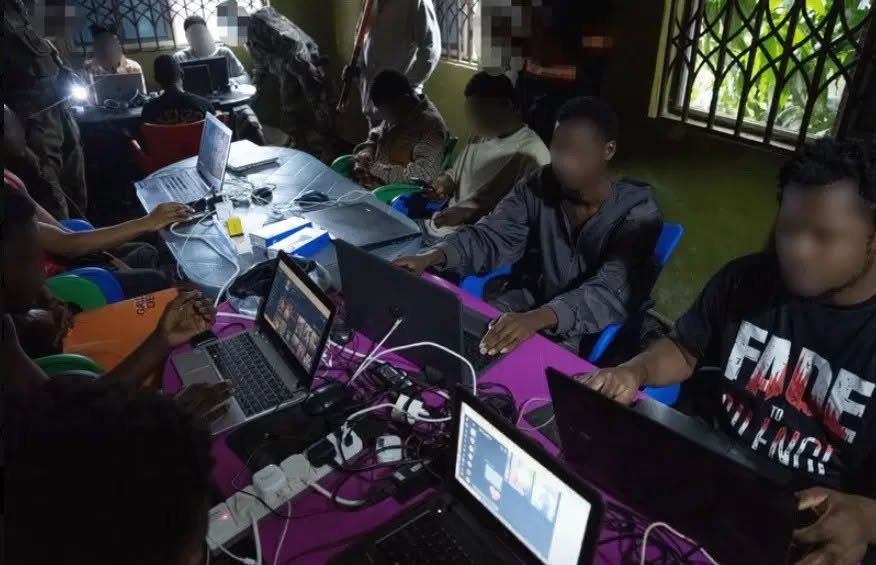
The Federal Bureau of Investigation’s recent arrest of 130 scammers at a Ghanaian cybercrime center—resulting in $10 million in losses, 89 victims, and the seizure of 300 devices—is a damning indictment of Ghana’s state apparatus and its leaders. While officials excel at hollow speeches, they remain paralyzed in the face of rampant criminality (Boateng, 2022; Transparency International, 2022). Ghana has devolved into a rabbit hole of organized fraud, where local criminals eagerly collaborate with international syndicates to breed ever more sophisticated scams. The state’s inaction—whether by design or incompetence—enables this criminal ecosystem to thrive, further eroding national credibility and the rule of law (Aning & Kwarkye, 2022; Osei-Tutu et al., 2016).
Why has Ghana allowed the cancer of online scams to metastasize, even as its citizens—Frederick Kumi (Abu Trica), Joseph Kwadwo Badu Boateng (Dada Joe Remix), Kofi Boat—and a sitting Member of Parliament, Ohene Kwame Frimpong, are extradited or arrested abroad for internet fraud and money laundering (US Department of Justice, 2023; Daily Graphic, 2024)? The answer is brutal: Ghana is now a nation obsessed with money, indifferent to its criminal origins (Boateng, 2022; Transparency International, 2022). Scammers are celebrated as digital geniuses, shielded by complicit spiritualists and pastors who serve as criminal accessories under the guise of religious piety (Aning & Kwarkye, 2022; Osei-Tutu et al., 2016).
The media, craving sensationalism, and social media mobs elevate these criminals to celebrity status, glamorizing their wealth while parents and communities turn a blind eye—until the inevitable downfall, which leaves families and children disgraced and destitute (GhanaWeb, 2024; Osei-Tutu et al., 2016). This culture of impunity, greed, and delusion has made Ghana a global byword for internet fraud, with devastating consequences for national reputation and social fabric.
The Ghanaian government and its institutions are deeply complicit in the scourge of online scams and transnational crime; no amount of performative statements can mitigate the national disgrace (Aning & Kwarkye, 2022; Boateng, 2022). Instead of urgently addressing domestic rot, Ghana’s leadership postures on the international stage—championing causes like reparations for slavery, to which it has contributed little—while the country burns from within. This is statecraft in name only: leaders excel at hollow speeches, empty gestures, and reckless borrowing to fund transient campaign promises, all designed to secure the next election, not the nation’s future (Gyimah-Boadi, 2017; Transparency International, 2022).
Law enforcement, packed with patronage appointees, is a critical part of the problem. Rather than combat fraud, officers routinely collude with scammers, treating reporting as a pathway to personal enrichment, not justice (Osei-Tutu et al., 2016; Daily Graphic, 2024). Action is only taken when foreign governments, like the United States, intervene and shine an international spotlight, as seen in the camera-staged arrest of Frederick Kumi by the Narcotic Control Commission’s Alexander Twum-Barimah—an event more concerned with public relations than real justice (US Department of Justice, 2023; Joy News, 2024). Ghana has lost the will and leadership to govern itself with integrity; its officials are now mere puppets, responsive only to foreign pressure.
U.S. Attorney General Jeanine Pirro’s declaration that American and British agencies are “fighting like hell to shut them down, seize their money,” and will relentlessly pursue fraudsters, is both a warning and a damning indictment (US Department of Justice, 2023; BBC News, 2024). Her reference to Ghana is not a diplomatic nod to democracy but a blunt signal: Ghana is now viewed as a cancerous node in the global web of online fraud, targeted for eradication at its source.
While the extraterritorial pursuit of criminals is fraught with controversy, it is morally and legally justified when the crimes inflict real harm on foreign citizens (Nadelmann, 1990; Goodman & Brenner, 2002). The financial, emotional, and psychological devastation wrought by Ghanaian-based scams cannot be dismissed or sanitized by nationalist rhetoric. By abdicating responsibility and letting foreign agencies lead the fight on its own soil, Ghana is not only ceding its sovereignty but accepting the humiliating role of a client state—subservient to foreign dictates and backroom threats (Aning & Kwarkye, 2022; Transparency International, 2022).
Ghana’s vaunted anti-colonial legacy is now a hollow boast; the state’s complicity and public apathy have handed the country’s reputation, and its autonomy, to outside powers. This is the bitter harvest of years spent ignoring rampant criminality.
Pirro’s glaring omission of Ghana’s security agencies in the global crackdown on online fraud is a blunt indictment: the National Crime Agency, Federal Bureau of Investigation and Department of Justice have zero trust in their Ghanaian counterparts (BBC News, 2024; US Department of Justice, 2023). For years, Ghanaian authorities have done next to nothing, idly watching as criminal syndicates expand unchecked (Aning & Kwarkye, 2022; Boateng, 2022).
The so-called US-Ghana “cooperation” is not a partnership of equals, but a colonial relic—where Western agencies conduct investigations and make arrests on Ghanaian soil, while Ghana’s agencies are sidelined or forced into humiliating compliance to avoid scandal (Nadelmann, 1990; Transparency International, 2022). This is not mutual respect; it is a damning verdict on the impotence and complicity of Ghana’s law enforcement establishment.
The Ghanaian government’s vision of democracy is an incoherent farce—an arrangement where wealthy criminals exploit the system, hire high-powered lawyers, and walk free on bail, while victims are trapped in endless legal battles and deepening misery. True democracy, even in its imperfect American form, is not about pampering criminals or letting their rights eclipse those of the victims. The rule of law demands that rights are balanced, but it also requires swift and certain punishment when evidence warrants—this is the bedrock of public trust in justice.
Mahama’s so-called “reset agenda” is empty theatre. Instead of recycling platitudes and weaponizing the law against rivals, his administration must face the real crisis: unchecked online scams and organized crime. Until the government abandons superficial reforms and cracks down on criminal networks, Ghana’s future will be auctioned off to fraudsters, drug lords, and digital mercenaries—leaving national security in ruins.
References
Aning, K., & Kwarkye, S. (2022). Ghana’s struggle with cyber fraud: The challenges of enforcement and governance. African Security Review, 31(1), 46-60.
BBC News. (2024, March 18). US and UK agencies crack down on global scam networks. https://www.bbc.com/news/technology-68639284
Boateng, F. D. (2022). Corruption and law enforcement in Ghana: Implications for security and justice. International Journal of Law, Crime and Justice, 70, 100514.
Daily Graphic. (2024, March 26). Ghanaian MP arrested in Europe for internet fraud. https://www.graphic.com.gh/news/general-news/ghanaian-mp-arrested-in-europe-for-internet-fraud.html
Joy News. (2024, April 20). NACOC’s PR blitz: Arrests for the cameras, not for justice. https://www.myjoyonline.com/nacocs-pr-blitz-arrests-for-the-cameras-not-for-justice/
GhanaWeb. (2024, April 2). US extradites Ghanaian scammers: National shame and lessons unlearned. https://www.ghanaweb.com
Gyimah-Boadi, E. (2017). Corruption in Ghana: Trends, causes, and consequences. Ghana Center for Democratic Development.
Nadelmann, E. A. (1990). Global prohibition regimes: The evolution of norms in international society. International Organization, 44(4), 479-526.
Osei-Tutu, E., Sarpong, S., & Owusu, B. (2016). Internet fraud and its impact on Ghana. International Journal of Cyber Criminology, 10(2), 163-180.
Transparency International. (2022). Corruption Perceptions Index 2022: Ghana. https://www.transparency.org/en/cpi/2022/index/gha
US Department of Justice. (2023, November 15). Ghanaian nationals extradited to US for romance scam and money laundering. https://www.justice.gov/opa/pr/ghanaian-nationals-extradited-us-romance-scam-and-money-laundering
