
Ghanaian leadership, much like their colonial predecessors, perpetuates a destructive legacy of exploitation and environmental devastation. As Brutus (2006) observed, oppressive regimes—regardless of their race or origin—are united in their exploitative behaviours. Ghana’s current economic policies, particularly in the mining sector, demonstrate a blatant disregard for the well-being of its people, future generations, and the environment. This is not progress; it is a betrayal. The so-called liberators have become agents of neocolonial ecocide, prioritizing revenue over the nation’s survival (Brutus, 2006). The result is not only the loss of innocence but the systematic destruction of the country’s future.
In this work, I unapologetically take up the mantle of a critical scholar to denounce the blatant failures of postcolonial African governments—most notably, Mahama and the National Democratic Congress. As an African and an Mfundisi, I am duty-bound to defend the continent’s very survival. Silence or polite deflection in the face of Ghana’s rampant ecological destruction is not mere inaction; it is active complicity (Mbembe, 2017; Nkrumah, 1965). Anyone unwilling to confront the devastation of our forests and waterbodies is an accessory to this generational crime. Academic pleasantries are obsolete. Ruthless critique and direct confrontation are now essential. This paper stands as my most hostile indictment yet—addressed directly to Sammy Gyamfi, the Chief Executive Officer of the Ghana Gold Board.
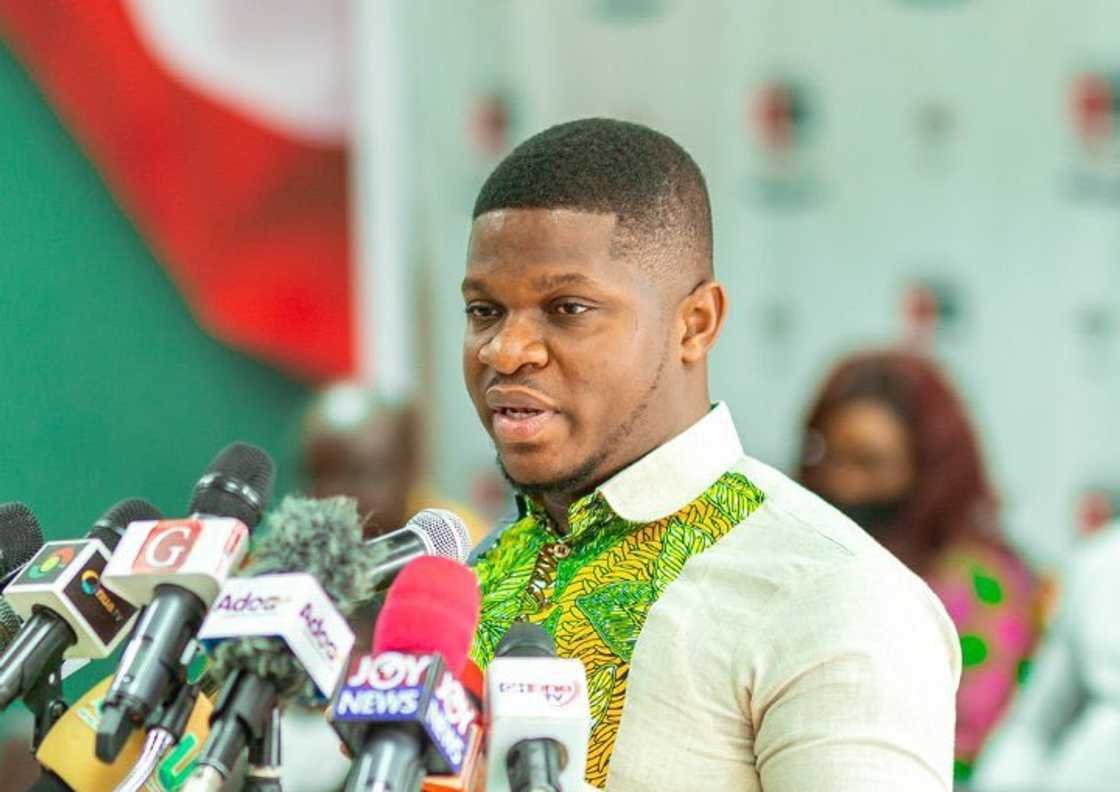
Recent footage of Sammy Gyamfi’s assertion that the Mahama administration would permit illegal mining provided it does not occur in forest reserves, residential areas, or near water bodies is both alarming and symptomatic of a broader crisis in Ghanaian leadership. Such a declaration flagrantly disregards the Mining Act and Environmental Protection laws—hardly a surprise, given the habitual merging of political expedience and dishonesty in Ghana’s public sphere (Ayee, 2013; Owusu-Nimo & Mantey, 2019). Worse still is the predictable claim by the Public Relations Office that the video was doctored, absent any original footage for verification—a tactic that insults public intelligence and undermines accountability. Gyamfi’s conduct is emblematic of a political class that speaks recklessly, retracts under scrutiny, and perpetually avoids responsibility (Gyampo, 2020). He is no innocent bystander; on the contrary, his rhetoric and actions have actively enabled the illegal mining crisis ravaging Ghana’s environment. Formal attire cannot disguise complicity or absolve him of blame.
Let there be no illusions: this scandal, like countless others, will pass without consequence or accountability. The Mahama administration—and those preceding it—have consistently lacked the political will to confront illegal mining, prioritizing campaign coffers and electoral gains over environmental stewardship and the rule of law (Ayee, 2013; Hilson, 2017). The mass of rural illegal miners has become a political asset, not a problem to be solved.
Both the Mahama and Akufo-Addo governments have shamelessly manipulated public opinion, unleashing compliant media, self-styled “experts,” and opportunistic journalists to sanitize their failures. This Goebbelsian strategy—repeating state-sanctioned falsehoods, shifting blame to artificial intelligence or the opposition, and distorting facts through relentless propaganda—has succeeded in numbing the public to outrage (Gyampo, 2020). The result is a society anesthetized to corruption, where official lies are recycled until they are mistaken for truth and responsibility is perpetually evaded.
As zealous disciples of the neoliberal economic order, the Mahama administration has perfected the art of mortgaging Ghana’s future for scraps—pursuing so-called “development” through shoddy infrastructure and ephemeral projects that crumble at the first sign of adversity (Ayee, 2013; Hilson, 2017). The result is a landscape dotted with unsafe buildings, garbage, and roads that swiftly deteriorate into hazards, vanishing altogether after seasonal rains.
Rural Ghana, as I witnessed firsthand, has been reduced to a wasteland of despair: opportunities have vanished, and indigenous populations are left destitute, forced to sell or mortgage ancestral lands to illegal miners for short-term survival. Rivers once celebrated for their purity are now filthy, poisoned by illicit chemicals, leading to alarming spikes in disease and environmental decay (Owusu-Nimo & Mantey, 2019). This is not development—it is calculated self-destruction, perpetrated by leaders willing to barter lives and land for fleeting gains.
Gyamfi and his ilk are architects of ecocide—masked collaborators in the systematic destruction of Ghana’s environment. As modern-day compradors, their loyalty lies not with the nation but with enriching cronies and family members, building private empires while ignoring the catastrophic fallout of their policies on marginalized communities (Ayee, 2013; Hilson, 2017). The subaltern, stripped of voice and agency, bears the brunt, while those who might resist have bartered their integrity for scraps, complicit as forests vanish and waterbodies become toxic wastelands (Owusu-Nimo & Mantey, 2019).
The hypocrisy is staggering: those orchestrating this ruin secure elite educations abroad for their offspring, ensuring the cycle of privilege and exploitation continues, while ordinary Ghanaians—who once cheered these leaders—are condemned to poverty and servitude. Social reproduction, though unwritten, is ruthlessly enforced in Ghanaian politics, perpetuating inequality and environmental collapse.
Ghanaians stand at a crossroads, and the decision before them is not about mindlessly echoing partisan slogans or falling for hollow campaign mantras like “Mahama is the hope” or “reset agenda”—catchphrases engineered and bought by political elites to manipulate public sentiment (Ayee, 2013; Gyampo, 2020). The stark reality is that the nation’s politicians, across all major parties, are self-serving profiteers, committed not to public service but to securing wealth and privilege for themselves and their kin. To support these parties is to endorse the nation’s ongoing demise—a death sentence masked as democratic choice (Hilson, 2017).
Ghana demands nothing less than an ethical revolution—a collective reckoning where citizens finally confront their own complicity in this machinery of exploitation and refuse to reward corruption with their votes. Only by withholding support from those who perpetuate the status quo can true change emerge. The country’s future is bleak; deep in crisis, Ghana teeters on the brink of collapse. Radical sacrifice is now required to rescue the nation from the abyss. Abahambe! Cry, the beloved country
References
Ayee, J. R. A. (2013). The political economy of the mining sector in Ghana. World Bank Publications.
Brutus, D. (2006). Their behaviour. In D. Brutus, Poetry and protest: A Dennis Brutus reader (pp. xx-xx). Chicago: Haymarket Books.
Gyampo, R. E. V. (2020). Political elites and democracy in Ghana: A critical assessment. African Studies Quarterly, 19(3), 55-74.
Hilson, G. (2017). ‘Constructing’ ethical mineral supply chains in sub-Saharan Africa: The case of gold. The Extractive Industries and Society, 4(3), 479-488.
Mbembe, A. (2017). Critique of Black reason. Duke University Press.
Nkrumah, K. (1965). Neo-colonialism: The last stage of imperialism. Thomas Nelson & Sons.
Owusu-Nimo, F., & Mantey, J. (2019). The impact and effect of illegal mining (galamsey) towards the socio-economic development of mining communities: A case study of Kenyasi in the Brong Ahafo Region. Journal of Social Science Studies, 6(2), 1-12.
