
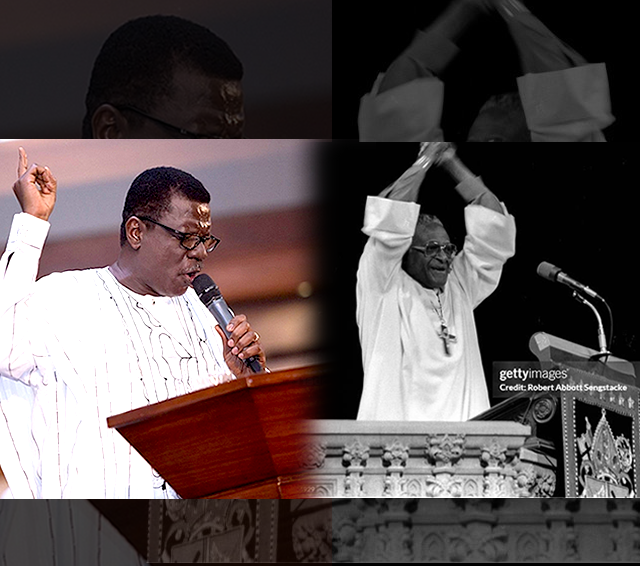
This paper issues a ruthless censure of the hollow, self-serving grandstanding of Ghana’s clergy, with Mensah Otabil as its most egregious representative. Otabil’s November 2026 attack on the so-called “conmen” and “fake prophets” in Ghana’s Prophetic Ministry is not only hypocritical—it is farcical. Otabil, a motivational speaker wrapped in clerical garb, is just another salesman in the lucrative faith industry, peddling prosperity to a docile congregation while decrying others for the very sins he commits (Gifford, 2015; Asamoah-Gyadu, 2015). His selective outrage is transparent: he castigates his rivals but shields his cronies—Nicholas Duncan Williams, Charles Agyinasare, Heyward-Mills, Sam Korankye Ankrah—from the same scrutiny. This is not spiritual leadership; it is crony capitalism masquerading as faith.
Otabil’s brand of Christianity is a hollow spectacle of wealth and arrogance, a blasphemous distortion of Christ’s message. He scoffs at the poor, confusing affluence for righteousness and dismissing poverty as moral failure. Such contempt is not only callous but a betrayal of the gospel: “Blessed are the poor, for theirs is the kingdom of God” (Luke 6:20, New International Version). Otabil’s theology—steeped in American televangelist excess—caters to the powerful and ignores the least among us (Gifford, 2015).
In stark contrast stands Archbishop Desmond Tutu—South Africa’s unyielding prophet of justice. Tutu’s faith was forged in the crucible of apartheid, where he risked his life confronting a regime that bombed churches, razed townships, and slaughtered Black South Africans with impunity (Boesak, 2005; Kumalo, 2013). He embodied ubuntu, the radical interconnectedness of all people, embracing even his enemies as children of God (Tutu, 1999). Tutu’s Christianity was not a shield for cowardice; it was a summons to costly solidarity, to defiance in the face of state terror, to reconciliation over revenge (Chikane, 2013; TRC, 1998).
Unlike Otabil’s divisive posturing—drawing lines between “righteous” and “sinners”—Tutu welcomed all, delighted in interfaith dialogue, and refused to weaponize the pulpit for personal gain. He used his influence to build coalitions for liberation, mentoring figures like Frank Chikane and Allan Boesak and leveraging the World Council of Churches against apartheid’s machinery (Kumalo, 2013). Tutu’s leadership during the Truth and Reconciliation Commission forced both perpetrators and victims to confront horrific truths, enabling a wounded nation to stumble toward healing (TRC, 1998).
Otabil, by contrast, is a preacher of comfort, not courage; a merchant of easy answers and empty promises. He cowers when power threatens, grows defensive when challenged, and turns the pulpit into a platform for self-aggrandizement. His ministry, obsessed with empire-building and foreign validation, stands exposed as a spiritual deficit—a fraud on the Ghanaian soul. Tutu, meanwhile, risked everything for the marginalized, consistently choosing justice over self-preservation (Ndlovu-Gatsheni, 2018).
Tutu’s impact extended far beyond South Africa’s borders. Unlike Otabil, who basked in the comfort of tele-evangelism, Tutu engaged in relentless grassroots evangelism, reaching the poor and disenfranchised across South Africa and beyond. From Durban’s streets to global corridors of power, Tutu’s presence was undeniable. In Western academia, at the United Nations, and in the U.S. Congress, he championed the oppressed, exposing the depravity of apartheid and forcing the world to act. While Otabil clings to televised sermons and parochial influence, Tutu catalyzed the international sanctions that crippled the apartheid regime—a level of moral leadership Otabil can only fantasize about (Boesak, 2005; Tutu, 1999).
As General Secretary of the South African Council of Churches(from 1978 to 1985), Tutu became a model for liberation icons like Frank Chikane and Allan Boesak. He forged global alliances, notably with the World Council of Churches, accelerating the demise of white-minority rule (Kumalo, 2013). Tutu’s religion was practical: liberation and redemption through action, not empty words. He put people first, practiced deep reflection, and modelled genuine service—all qualities starkly lacking among Ghana’s mercenary clergy, whose gospel begins and ends with money (Gifford, 2015).
When Nelson Mandela was inaugurated, it was Tutu—servant of God, moral anchor—who officiated. At the Truth and Reconciliation Commission, Tutu’s moral authority compelled apartheid’s architects and enforcers, like Adriaan Johannes Vlok (Minister of Law and Order from 1986 to 1991), to confess their crimes. Even Winnie Madikizela-Mandela admitted complicity in the murder of Stompie Seipei under Tutu’s scrutiny (TRC, 1998; Chikane, 2013).
Tutu’s activism was not cheap rhetoric. He shepherded South Africa through the minefield of post-apartheid vengeance, promoting restorative justice over retribution (Tutu, 1999). He knew vengeance would only perpetuate suffering. For Tutu, nation-building required forgiveness and unity, not the festering of old hatreds—a lesson Ghana’s self-absorbed clergy have yet to learn (Ndlovu-Gatsheni, 2018).
The measure of a servant of God is not public bravado or the size of one’s congregation. It is the willingness to confront evil, to embrace humility, to serve the “least of these.” Tutu’s legacy is a rebuke to the Otabils of Ghana—a call to abandon arrogance, embrace costly grace, and pursue genuine justice. Until Ghana’s clergy heed this lesson, the nation will languish under the weight of spiritual delusion and mediocrity. Abahambe! Cry, the beloved country.
References
Asamoah-Gyadu, J. K. (2015). African charismatics: Current developments within independent indigenous Pentecostalism in Ghana. Wipf and Stock.
Boesak, A. (2005). The tenderness of conscience: African renaissance and the spirituality of politics. Sun Press.
Chikane, F. (2013). The things that could not die: The life and legacy of Archbishop Desmond Tutu. Jacana Media.
Gifford, P. (2015). Christianity, development and modernity in Africa. Hurst & Company.
Kumalo, R. S. (2013). From despair to hope: The prophetic witness of the churches in South Africa. Journal of Theology for Southern Africa, 145, 5–16.
Ndlovu-Gatsheni, S. J. (2018). Epistemic freedom in Africa: Deprovincialization and decolonization. Routledge.
Tutu, D. (1999). No future without forgiveness. Random House.
Truth and Reconciliation Commission. (1998). Truth and Reconciliation Commission of South Africa Report. Government of South Africa.
