
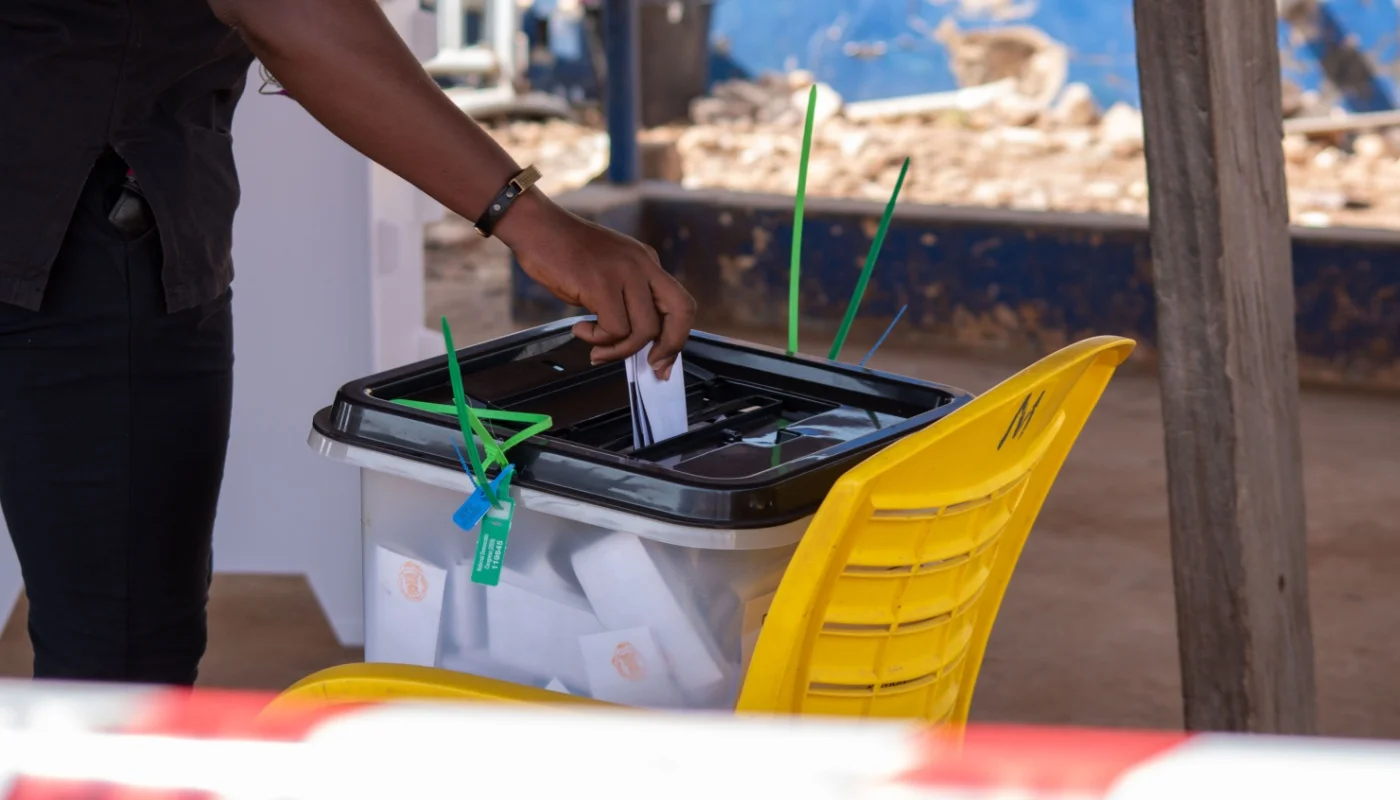
In this essay, I interrogate a persistent pathology in Ghanaian politics: the ritualistic cycle of grand promises and symbolic delivery that surrounds every general election. Both the National Democratic Congress (NDC) and the New Patriotic Party (NPP) perpetuate this charade, appearing to differ on policy but sharing the same political DNA—a culture of patronage and electoral expediency (Gyampo, 2017; Whitfield, 2009). Despite rhetoric of change, party leadership remains drawn from the same elite networks, and both parties excel at seducing the electorate with empty pledges, ultimately prioritizing electoral victory and party coffers over substantive governance (Gyimah-Boadi, 2009; Abdulai & Hickey, 2016).
This paper critically examines the unfulfilled promises and policy failures of Presidents Nana Akufo-Addo and John Dramani Mahama, focusing on the inability to combat illegal mining (“galamsey”), resolve chaos in the school placement system, and address chronic load shedding (power outages). These failures reveal the underlying collusion and self-interest that define Ghana’s two-party system, suggesting that electoral promises are less about nation-building and more about perpetuating a cycle of deferred problems and recycled disappointments (Oduro, 2019; Boafo-Arthur, 2007).
In his second term—arguably the most turbulent period of his presidency due to the economic fallout from COVID-19—President Nana Akufo-Addo staked his legacy on eradicating illegal mining (“galamsey”), a crisis decimating Ghana’s forests and polluting vital water bodies (Ayee, 2021; Hilson, 2017). Once renowned for its lush landscapes, Ghana now faces rapid environmental degradation, with rivers reduced to silt-laden streams unfit for human use (Owusu-Nimo & Mantey, 2021). In a hasty, performative response, the government authorized the seizure and burning of excavators at mining sites and arrested low-level operators—often impoverished youth and adults driven to galamsey by unemployment and desperation (Hilson, 2017; Owusu-Nimo & Mantey, 2021).
However, the true architects of illegal mining—Chinese nationals, politically connected business elites, security personnel, and even pastors—remained untouched, shielded by a culture of impunity that mocks the rule of law (Lanning & Martin, 2018; Crawford & Botchwey, 2018). The selective crackdown failed to deliver justice or deterrence, as confiscated excavators mysteriously vanished from state custody, exemplifying the state’s complicity and lack of accountability (Ayee, 2021; Crawford & Botchwey, 2018). In any credible democracy, such lapses would trigger thorough investigations and the prosecution of those at the top of the criminal pyramid—not just the desperate bottom-feeders.
At its weakest moment—having failed to deliver on the flagship promise to combat illegal mining and environmental devastation—the then-opposition National Democratic Congress (NDC), led by John Mahama, pledged to declare a national emergency to tackle illegal mining if elected. This was political theatre: Mahama knew such a move would stretch constitutional limits and was unlikely to withstand legal scrutiny (Prempeh, 2012; Appiah, 2018). In a climate of frustration, opportunistic pastors—many functioning more as businessmen than spiritual leaders—were courted for support, while a disillusioned public and disaffected members of the New Patriotic Party (NPP), frustrated by President Akufo-Addo’s unyielding stance and refusal to heed calls for reforms (such as the removal of Finance Minister Ken Ofori-Atta), began to defect or shift their votes (Gyampo, 2017; Ayee, 2021). This shifting political landscape underscores the cynical exploitation of public discontent, with both parties trading in empty promises and populist rhetoric rather than substantive policy solutions (Abdulai & Hickey, 2016; Oduro, 2019). The habitual courting of influential religious figures and the weaponization of crisis betray a political culture more invested in electoral victory and partisan advantage than in genuine governance or constitutional fidelity
Aggressively critiquing the so-called reforms, Mahama’s administration has largely replicated Akufo-Addo’s ineffective approach to illegal mining, perpetuating a cycle of political theater and institutional impotence. Seizing and burning excavators, “regularizing” illegal mining—an ambiguous concept devoid of legal substance—and launching toothless agencies like the National Anti-Illegal Mining Operations Secretariat (NAIMOS) have done little to address the underlying crisis (Hilson, 2017; Crawford & Botchwey, 2018). Rebranding illegal mining as “community” or “responsible” mining, without clear regulatory mechanisms, amounts to little more than semantic window-dressing (Owusu-Nimo & Mantey, 2021).
The creation of the Ghana Gold Board (GoldBod)—a redundant entity that usurps the role of the Precious Minerals Marketing Company (PMMC)—exemplifies policy duplication and administrative bloat (Lanning & Martin, 2018). Most troubling is the blatant rotation of mining site ownership from NPP loyalists to NDC affiliates, mirroring the mafia-like handover of territorial control after a change in political patronage. This entrenched partisanship has deepened corruption and rendered Ghana’s anti-illegal mining efforts a tragic farce, benefiting the political elite while the environment and local communities suffer (Ayee, 2021; Abdulai & Hickey, 2016).
To illustrate the corrosive effects of political impunity, consider the events of 1 November 2024, when a NAIMOS team led by Colonel Dominic Buah narrowly escaped lynching by illegal miners on the Goaso-Hwidiem road in the Ahafo Region—a brazen act emblematic of Ghana’s lawlessness in the fight against galamsey (Crawford & Botchwey, 2018; Ayee, 2021). The first responder, an armed National Defence Intelligence employee, failed to intervene. Soon after, NDC Member of Asutifi North, Benjamin Kwaku Addo, reportedly ordered the release of detained suspects at the behest of Asutifi South MP Collins Dauda. This gross interference in law enforcement exemplifies the entrenched impunity and political protectionism that undermine state authority and the rule of law (Abdulai & Hickey, 2016; Lanning & Martin, 2018).
Furthermore, the aftermath of this incident offers no surprises. Predictably, this criminal episode was swept under the rug—no accountability, no prosecution. Both the NDC and NPP repeatedly shield their foot soldiers from legal consequences to maintain their patronage networks and electoral machinery, a pattern also evident in the July 2025 attack on former Fisheries Minister Mavis Hawa Koomson (Gyampo, 2017; Oduro, 2019). In any rule-of-law-based polity, such criminality and quasi-militia activity would trigger constitutional and penal sanctions, with both perpetrators and their political enablers facing jail time. In Ghana’s prevailing jungle politics, masquerading as democracy, impunity reigns unchecked—citizens have little reason to expect justice (Whitfield, 2018).
Turning to the education sector, the school placement system for junior secondary students entering senior secondary schools has been a spectacular failure under both the NDC and NPP governments. Despite superficial improvements during Nana Akufo-Addo’s tenure, the system has fostered an environment ripe for corruption: students who fail to meet elite school requirements—such as Achimota, Mfantsipim, Adisadel, and Holy Child—are able to secure admission through bribery (Ananga, 2011; Akyeampong, 2014). The opacity and lack of transparency surrounding the placement process have fueled parental frustration, as evidenced by the public outcry in September 2006, when parents protested the secrecy and scant information provided by education authorities (Oduro, Dachi, & Fertig, 2008). The blame lies squarely with policymakers who implement poorly conceived policies without considering their far-reaching consequences.
In stark contrast, educational transitions in countries like Canada are merit-based and transparent. Students progress seamlessly from junior to senior high school without bureaucratic hurdles, and university admissions are determined by academic achievement rather than political favouritism or bribery (Finnie, Childs, & Wismer, 2011). Canadian students receive timely notifications and ample preparation time, allowing for a smooth and equitable transition to higher education. This meritocratic model starkly exposes the failures and corruption of Ghana’s placement system, revealing how entrenched patronage and lack of accountability continue to undermine educational equity and national progress (Akyeampong, 2014; Oduro et al., 2008; Finnie et al., 2011).
Building on these systemic failures, Ghana’s education sector is plagued not only by policy flaws but by a culture of political deflection and abdication of responsibility. Rather than confronting the glaring deficits in the school placement system, the Minister for Education and his deputies, along with party loyalists and paid commentators, waste valuable airtime on partisan radio and television, fixating on blaming predecessors instead of crafting solutions (Akyeampong, 2014; Ananga, 2011). This juvenile blame game raises critical questions: What, precisely, is the Minister for Education paid—handsomely and with full perks—to accomplish? Is the taxpayer funding a chorus of lamentations while Ghanaian mothers and students are left to navigate the labyrinthine placement process alone?
Such political posturing is an affront to the basic tenets of public service and accountability. Ministers are appointed to solve problems, not to stage partisan melodramas or indulge in perpetual grievance (Oduro et al., 2008; Finnie et al., 2011). If Ghana’s education policymakers revisited their contractual mandates, they would find no provision for professional whining while chaos reigns in their sector. The time for excuses has long passed; what is needed is decisive leadership and systemic reform.
Transitioning to the issue of energy policy, Nana Akufo-Addo, while in opposition, weaponized the Mahama administration’s failure to resolve load-shedding—popularly known as “dumsor”—branding it as a hallmark of incompetence (Ayee, 2017; Gyampo, 2020). This resonated with an electorate weary of power outages, leading to Mahama’s defeat in the 2024 elections. Yet, under Akufo-Addo’s tenure, the promise of reform proved hollow: power supply remained erratic, with official excuses devolving into patronizing narratives about pylons and hydro-stations—hardly a credible explanation for persistent national malaise (Obeng-Darko, 2022).
The pattern is clear: both the National Democratic Congress and the New Patriotic Party are locked in a cycle of rhetorical one-upmanship, each promising transformation but delivering little more than recycled disappointment (Whitfield, 2018; Abdulai & Hickey, 2016). Their antics are akin to rival used-car dealers—masters of persuasion, selling voters “lemons” disguised as progress, only for the public to discover the rot beneath the surface once the “purchase” is complete. Until Ghanaian voters reject the myth of meaningful difference between these two political entrepreneurs and demand authentic accountability, the country will remain mired in debt, stagnation, and policy mediocrity—a nation-state in name only, betrayed by leaders better at wordplay than genuine nation-building (Frempong, 2017; Obeng-Darko, 2022).
References
Abdulai, A. & Hickey, S. (2016). The politics of development under competitive clientelism: Insights from Ghana’s education sector. African Affairs, 115(458), 44-72.
Ananga, E. D. (2011). Dropping out of School in Southern Ghana: The Push-out and Pull-out Factors. Consortium for Research on Educational Access, Transitions and Equity (CREATE) Research Monograph No. 55.
Appiah, A. (2018). Presidential Privilege and State Resources in Ghana: A Critical Appraisal. Accra: Freedom Publications.
Akyeampong, K. (2014). Educational Expansion and Access in Ghana: A Review of 50 Years of Challenge and Progress. Research in Comparative and International Education, 9(3), 331–345.
Ayee, J. R. A. (2021). Political Corruption and Illegal Mining in Ghana. African Studies Review, 64(1), 23-46.
Ayee, J. R. A. (2017). Ghana’s Energy Crisis: Politics, Policy and Public Opinion. Journal of Energy in Southern Africa, 28(1), 53-62.
Boafo-Arthur, K. (2007). Ghana: One Decade of the Liberal State. Zed Books.
Crawford, G., & Botchwey, G. (2018). Conflict, collusion and corruption in small-scale gold mining: Chinese miners and the state in Ghana. Resources Policy, 56, 287-294.
Finnie, R., Childs, S., & Wismer, A. (2011). Underrepresented groups in postsecondary education in Canada: A literature review. Higher Education Quality Council of Ontario.
Frempong, A. K. D. (2017). Ghana’s Public Sector: Challenges and Prospects. Friedrich-Ebert-Stiftung.
Gyampo, R. E. V. (2020). Political Elites and Democratic Accountability in Ghana. Democratization, 27(4), 679-696.
Gyampo, R. E. V. (2017). Political Elites and Democratic Consolidation in Ghana. Democratization, 24(7), 1242–1260.
Gyimah-Boadi, E. (2009). Another Step Forward for Ghana. Journal of Democracy, 20(2), 138-152.
Hilson, G. (2017). Shootings and burning excavators: Some rapid reflections on the government of Ghana’s handling of the galamsey crisis. The Extractive Industries and Society, 4(3), 527-530.
Lanning, G., & Martin, S. (2018). Plunder! How Public Assets Are Stolen and Sold by the Rich, Powerful and Well Connected. Zed Books.
Obeng-Darko, N. (2022). The politics of electricity supply in Ghana: Policy incoherence and the persistence of “dumsor”. Energy Policy, 162, 112780.
Oduro, F. (2019). Patronage Politics and Ghana’s Public Sector. African Affairs, 118(471), 122-141.
Oduro, G. K. T., Dachi, H. A., & Fertig, M. (2008). Examining Educational Leadership and Quality in Sub-Saharan Africa. Centre for Commonwealth Education & Aga Khan University, Educational Quality Improvement Programme.
Owusu-Nimo, F., & Mantey, J. (2021). Galamsey in Ghana: A policy impasse? Journal of Sustainable Mining, 20(1), 1-9.
Prempeh, H. K. (2012). The Politics of Presidential Benefits in Ghana. African Affairs, 111(444), 382–404.
Whitfield, L. (2018). Economies after Colonialism: Ghana and the Struggle for Power. Cambridge University Press.
Whitfield, L. (2009). ‘Change for a Better Ghana’: Party Competition, Institutionalization and Alternation in Ghana’s 2008 Elections. African Affairs, 108(433), 621-641.
