
A nation intent on its own moral collapse cannot be rescued by goodwill alone. Ghana’s ethical fabric is unravelling, evidenced by the proliferation of cocaine trafficking, online dating scams, and a youth culture obsessed with quick wealth—often enabled by complicit political elites. “Drowning” here stands as a metaphor for this deepening decline. This paper calls for a grassroots movement—not insurrection, but a courageous civic mobilization to confront these social ills with robust legal and constitutional action. Renewed civic consciousness is essential to halt this decay. Ghana must recover the principled identity of Nkrumah’s era—a nation respected for its integrity and leadership. Only through collective moral awakening can Ghana reclaim its status as a beacon of African progress.
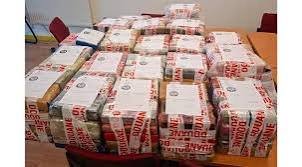
The recent seizure of $260 million worth of cocaine in France, hidden in plastic waste from Ghana, is not an anomaly—it is a symptom of a nation entrenched in the global narco-triangle linking South America, Europe, and Africa (UNODC, 2021; Aning & Kwarkye, 2022). Ghana’s complicity as a transit hub is well documented by international agencies, yet successive governments have turned a blind eye, preferring denial and inaction to decisive intervention (UNODC, 2021). This ostrich-like approach in the digital age is not only naïve but also a damning indictment of Ghana’s political leadership, which has prioritized personal enrichment over the nation’s integrity and the well-being of its youth (Gyimah-Boadi & Prempeh, 2012). The cost is catastrophic: rising addiction, eroded global reputation, and a generation at risk.
Building on this crisis of accountability, the Ghanaian government’s response—parading a handful of suspects and seizing a few vehicles—is a hollow spectacle. Such tokenism fails to confront the entrenched corruption that infects state institutions from top to bottom (Arthur, 2015; Owusu, 2020). Interior Minister Alhaji Mohammed Mubarak Muntaka’s refusal to name implicated officials is an egregious act of obfuscation. Why the selective disclosure on a matter that strikes at the core of national security and Ghana’s international credibility? The minister’s silence suggests cowardice—an abdication of leadership when transparency is most needed (Boateng & Darko, 2016). This pattern of evasion must end. The minister and complicit officials in police, customs, immigration, and prison services should be immediately suspended pending independent investigation (Mensah, 2016). Ghana’s reputation and the integrity of its institutions demand nothing less.
In light of mounting evidence, President John Dramani Mahama’s invitation to security chiefs is nothing more than performative theatre. The trafficking of cocaine is now entrenched in Ghanaian life, enabled by security agencies riddled with political appointees more interested in currying presidential favour and securing post-retirement perks than upholding their mandate (Arthur, 2015; Owusu, 2020). These high-profile meetings are a costly charade—wasting public funds while sidestepping accountability and protecting the power structure. A serious leader would treat such breaches as urgent national security crises, immediately dismissing complicit agency heads and pursuing independent investigations (Mensah, 2016). Mahama’s reluctance to act decisively betrays a preference for regime stability over national integrity, perpetuating a cycle of impunity that emboldens criminal networks.
Worse still, it does not require extraordinary intelligence to spot ill-gotten wealth in Accra’s elite enclaves—Trassaco, Airport Hills, East Legon, and Cantonments. Multi-million dollar mansions are owned by politicians and so-called businessmen whose declared incomes could scarcely cover rent in working-class New Town (Gyimah-Boadi & Prempeh, 2012; Owusu, 2020). Customs officers flaunt fleets of luxury vehicles and amass properties wildly disproportionate to their official earnings. Politicians on modest government salaries send their children to Harvard and Yale, paying fees that far exceed their legal incomes. This conspicuous consumption is a public indictment of systemic corruption, yet state agencies remain paralyzed or complicit (Arthur, 2015).
Taking this decay further, a new class of Ghanaian cybercriminals—youth and adults alike—now rivals their Nigerian counterparts in exploiting the anonymity of digital platforms to prey on vulnerable Western seniors seeking companionship (Button, 2020; Boateng et al., 2011). These scammers, celebrated as local “bosses,” openly flaunt their wealth at parties, enjoying the admiration of friends, family, police, and even some politicians (Tade & Aliyu, 2011). With a few scammers recently extradited to the U.S., some exploit Ghana’s judicial system to delay justice, while others remain protected by indifferent police—evidence of institutional failure and complicity (Boateng, 2022; Alhassan & Tankebe, 2021). Their illicit wealth is perversely rationalized as a means to address youth unemployment, a task the state has abdicated. This abdication signals a profound erosion of legal authority and a tacit endorsement of criminality for economic survival (Osei-Tutu et al., 2016).
The reality is stark: Ghana’s status as a cocaine hub is not accidental. The importation model of crime explains that traffickers exploit Ghana’s weak enforcement and a justice system infamous for leniency—serious offences routinely end in token penalties (Aning & Kwarkye, 2022; Alhassan & Tankebe, 2021). Police and judges complicit in trafficking are rarely held accountable, and political patronage ensures their protection or promotion, undermining any credible fight against organized crime (Atuguba, 2007; Owusu, 2020).
To counter this narco-crisis, the state must raise the stakes: immediate arrest and detention, asset forfeiture, exhaustive investigations, and the imposition of life sentences or capital punishment where warranted. No one—politicians, law enforcement, or judges—should be shielded from prosecution (Alhassan & Tankebe, 2021). Ghanaian citizens must discard partisan loyalty and demand uncompromising justice. Without radical reform, narco-lords and their enablers will rule by proxy, eroding the nation’s fabric from within. Complacency is not an option; delay only deepens the crisis.
References
Alhassan, S., & Tankebe, J. (2021). Corruption, trust, and criminal justice in Ghana. International Journal of Law, Crime and Justice, 66, 100497.
Aning, K., & Kwarkye, S. (2022). Ghana’s struggle with drug trafficking: The challenges of enforcement and governance. African Security Review, 31(1), 46-60.
Arthur, J. (2015). Drug trafficking and political corruption in Ghana: A threat to democratic governance. Journal of Money Laundering Control, 18(3), 320-335.
Atuguba, R. (2007). The state, criminal justice, and security in Ghana. Crime, Law and Social Change, 47(4-5), 361-375.
Boateng, F. D. (2022). Corruption and law enforcement in Ghana: Implications for security and justice. International Journal of Law, Crime and Justice, 70, 100514.
Boateng, F. D., & Darko, I. N. (2016). Corruption in Ghana: Trends, causes, and consequences. African Security Review, 25(2), 151-166.
Boateng, R., Akamavi, R., & Ndoro, T. (2011). Internet fraud: A study of the dynamics of 419 scams in Sub-Saharan Africa. Journal of Financial Crime, 18(4), 400-419.
Button, M. (2020). Cyber fraudsters and their victims in Ghana: Exploring the actors, networks, and processes. Journal of Financial Crime, 27(4), 1181-1197.
Gyimah-Boadi, E., & Prempeh, H. K. (2012). Oil, politics, and Ghana’s emerging democracy. Journal of Democracy, 23(3), 94-108.
UNODC (United Nations Office on Drugs and Crime). (2021). World Drug Report 2021. United Nations Publications.
Mensah, E. (2016). Corruption and public sector reform in Ghana: Issues and challenges. African Journal of Public Affairs, 9(2), 44-55.
Osei-Tutu, E., Sarpong, S., & Owusu, B. (2016). Internet fraud and its impact on Ghana. International Journal of Cyber Criminology, 10(2), 163-180.
Owusu, G. (2020). The politics of crime and security in Ghana: Understanding the role of the state. African Affairs, 119(475), 41-63.
Tade, O., & Aliyu, I. (2011). Social organization of internet fraud among university undergraduates in Nigeria. International Journal of Cyber Criminology, 5(2), 860-875.
