
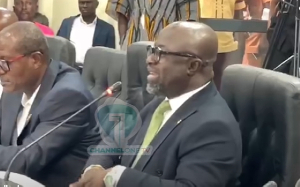
In this essay, I unapologetically confront the disgraceful failure of Ghana’s system in the Obuasi Senior High Technical School case. The deafening silence and arrogance of government officials are not mere shortcomings—they are active endorsements of neocolonial patriarchy that persists in Ghana. State-sponsored women’s empowerment is little more than a cynical smokescreen; the brutal truth is that girls and women remain commodified, relegated to second-class status and sexual exploitation for male gratification. Ghana’s patriarchal institutions, led by men and abetted by their female subordinates, refuse to tackle gender-based violence, perpetuating a culture of impunity. I explicitly target the Mayor of Kumasi, Richard Ofori Agyemang Boadi, as a symbol of this rot. For far too many Ghanaian—and African—men, injustice is only real when their own families suffer. Such willful blindness and rationalization of sex-based violence are nothing short of contemptible. My response is absolute revulsion.
Addressing the Parliament Local Governance Committee on 28 October 2026, the Mayor of Kumasi shamelessly distanced himself from responsibility in the wake of allegations linking his friend, Zakaria Abdulai—the disgraced former headmaster of Obuasi Senior High Technical School—to sexual violence against students (Ghanaweb, 2026). The mayor’s admission of friendship, coupled with his claim of lacking supervisory authority and indifference toward justice for the victims, is emblematic of the entrenched rot in Ghanaian governance (Ghanaweb, 2026; Aning & Okyere, 2021; Ampofo, 2019). Such evasive posturing is symptomatic of a political culture where those entrusted with public trust shield themselves and their parties, offering opinions only when political fortunes wane, and self-preservation is at stake (Gyampo, 2020).
This blatant disregard for the suffering of victims—condemned to lives of trauma, disease, and social stigma—illustrates a deep moral bankruptcy. For many critical African scholars, this is no surprise; the machinery of self-preservation within the National Democratic Congress and its allies consistently tramples justice and re-traumatizes survivors (Ardayfio-Schandorf et al., 2012). The mayor’s response is not merely diversionary—it is a calculated act of complicity, perpetuating a legacy of gender-based violence and institutional betrayal.
Doubling down on flagrant disregard for the victims and their families, the mayor brazenly shirked all responsibility, claiming he is neither the Ghana Education Service nor the police and thus bears no accountability (GhanaWeb, 2026). This is a textbook display of dereliction of civic and moral duty—especially galling given his admission of friendship with the accused sexual predator and his private counsel to the offender. Such evasive rhetoric is a grotesque betrayal of public trust (Ampofo, 2019; Gyampo, 2020). Would the mayor hide behind bureaucratic technicalities if his own relatives were among the victims? Unlikely. His conduct reveals a pathological dissociation from the suffering of others, sacrificing innocent girls to shield a predator and preserve his own political comfort. This is not leadership; it is complicity and cowardice.
The mayor’s disgraceful statements before the committee are not merely personal failures—they epitomize Ghana’s entrenched patriarchal rot. This culture watches girls and women die prematurely, trafficks them without remorse, and trivializes rape with pitiful settlements, leaving victims haunted for life (Ampofo, 2019; Ardayfio-Schandorf et al., 2012). When genuine solidarity is needed, high-profile figures—including Vice President Nana Jane Opoku-Agyemang and opportunistic social media feminists—are conspicuously silent until it is politically or socially expedient. Even some female academics exploit these tragedies for personal gain, using victims’ suffering as leverage for funding and career advancement. This pattern of hypocrisy and exploitation is a national disgrace.
Even by his own admission, the mayor’s follow-up was a farce. Unsatisfied with Abdulai’s explanation, he turned not to law enforcement or child protection services, but to his constituency secretary—an English teacher—demonstrating a staggering abdication of responsibility (GhanaWeb, 2026). Traumatized victims were systematically ignored, while the mayor relied on hearsay from the senior housemistress, who simply relayed the perpetrator’s denial. Such buck-passing is not just incompetence; it is willful neglect of the law and the Constitution, which clearly assigns investigative authority to the police, not school staff (Ampofo, 2019). In Ghana’s political landscape, basic accountability is treated as rocket science—an absurdity that perpetuates injustice and leaves victims abandoned.
The mayor’s directive to the headmistress—ordering her to keep “female students” away from Abdulai’s house—reveals damning self-incrimination (GhanaWeb, 2026). Despite claiming no authority, he intervened in matters under Ghana Education Service jurisdiction, exposing his awareness of Abdulai’s predatory behaviour. Such intervention, while publicly distancing himself, is a classic tactic of passive complicity (Ampofo, 2019). Rather than act decisively, the mayor delayed, deflected, and effectively enabled further abuse. His actions make him not just a bystander, but an accessory and enabler of sexual violence. The bloodless bureaucracy he represents perpetuated harm until victims were forced to seek their own justice—a profound institutional betrayal.
The mayor’s own account—summoning Abdulai for a thirty-minute meeting and warning him not to invite female students—betrays a tacit admission of belief in the rape allegations (GhanaWeb, 2026). His caution only makes sense if he recognized Abdulai’s predatory reputation. More damning is the mayor’s advice to Abdulai: “Don’t let people’s perception become reality,” a statement that acknowledges Abdulai’s public image as a serial sexual predator. Yet, hiding behind the excuse of lacking “supervisory role,” the mayor chose inaction, deflecting responsibility to the Ghana Education Service. This is not mere negligence; it is passive complicity, perpetuating institutional protection for abusers under the guise of bureaucratic technicality (Ampofo, 2019; Ardayfio-Schandorf et al., 2012).
This case exposes the rot at the heart of Ghanaian society: a mayor, emboldened by the complicity of party loyalists and colleagues, brazenly trivializes a tragedy—mocking the pain of victims while shielding predators. His confidence, nourished by a culture that grooms girls to suffer in silence and lets abusers roam free, is a damning indictment of a nation where institutions exist only in name, and public servants master the art of pretense. In Ghana, political connections trump justice; predators like Abdulai are protected, while victims are abandoned. A nation’s greatness is measured by its protection of the vulnerable—by this metric, Ghana fails utterly. In a truly just society, the mayor, Abdulai, and every bystander to these crimes would face justice—not impunity. Abahambe! Cry, the beloved country.
References
Aning, K., & Okyere, F. O. (2021). Governance, corruption, and accountability in Ghana: Revisiting the foundations. African Affairs, 120(479), 279–299.
Ampofo, A. A. (2019). Gender-based violence in Ghana: The politics of silence and denial. Ghana Studies, 22(1), 14–33.
Ardayfio-Schandorf, E., Amissah, L., & Atta, E. (2012). Violence against women and children in Ghana. Gender & Behaviour, 10(1), 4432–4450.
GhanaWeb. (2026, October 28). ‘I’m not GES, I’m not police’ – Watch as Kumasi Mayor is grilled over Obuasi SHTS scandal. https://www.ghanaweb.com/GhanaHomePage/NewsArchive/I-m-not-GES-I-m-not-police-Watch-as-Kumasi-Mayor-is-grilled-over-Obuasi-SHTS-scandal-2058900
Gyampo, R. E. V. (2020). Political elites and democracy in Ghana: A critical assessment. African Studies Quarterly, 19(3), 55–74.
