
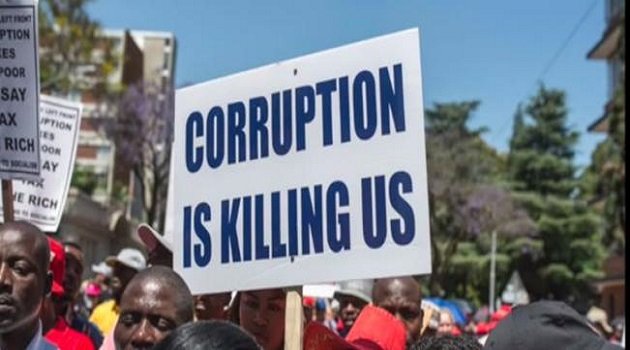
Addressing Ghana’s most urgent issues is not an antagonistic exercise, but a scholarly imperative. Despite my profound respect for Ghana’s anticolonial legacy—especially under Kwame Nkrumah, whose administration sacrificed scarce resources to support African liberation from colonialism and apartheid (Boafo-Arthur, 2007; Rooney, 2007)—the country now staggers under the weight of endemic corruption. Rationalizations that corruption is merely a “perception problem” are intellectually dishonest, given its documented depth and reach (Gyimah-Boadi, 2017; Asante & Ayee, 2021). On Ghana’s moral landscape, corruption is both vertical and horizontal, permeating every stratum of society. Finding a truly honest public servant is as rare as the proverbial needle in a haystack (Ampratwum, 2008; Transparency International, 2022). This paper interrogates a foundational question: Where did Ghana lose its moral and ethical footing?
I open this paper with the words of Lee Kuan Yew, the late Prime Minister of Singapore, whose legacy of servant leadership remains profoundly relevant to 21st-century postcolonial Ghanaian politics (Barr, 2014; Lee, 2000). While Nkrumah’s contributions to national and continental development are undeniable, I deliberately set him aside to avoid charges of bias from his critics and to invite a wider spectrum of scholarly and public engagement. This approach is essential for a candid discourse on Ghana’s entrenched systemic corruption, particularly among its leadership (Gyimah-Boadi, 2017; Ampratwum, 2008). For the purposes of this debate, I define corruption not narrowly as mere financial impropriety, but broadly through a cosmopolitan and eclectic lens—encompassing the moral decay of inaction and complicity, especially when individuals shield wrongdoers due to kinship or personal connections (Asante & Ayee, 2021; Hasty, 2005). This is not a reductionist critique; it is a call to confront the full spectrum of Ghana’s corrosive malaise
Lee Kuan Yew’s warning is clear and uncompromising: once corruption infects a political system from top to bottom, no revolution can cure it. Cleansing must start at the top, led by courageous, morally upright leaders with unquestioned integrity—an arduous, systematic process (Lee, 2000; Barr, 2014). Singapore’s success was not accidental; it was the product of relentless leadership and zero tolerance for corruption.
In contrast, 21st-century Ghana is plagued by a normalization of corruption—patronage, political protection, and the relentless pursuit of wealth are celebrated, not condemned (Gyimah-Boadi, 2017; Ampratwum, 2008). Neither the political class nor anti-corruption organizations have demonstrated the courage or integrity to break this cycle. The collective rot is pervasive, and Ghana’s so-called watchdogs are either complicit or powerless (Asante & Ayee, 2021; Hasty, 2005). Until true moral leadership emerges, Ghana’s fight against corruption is lost before it begins.
No analysis of Ghana’s crisis is complete without addressing illegal mining (galamsey), rampant online romance scams, and transnational cocaine trafficking. These scourges are not simply failures of weak leadership or bureaucratic inertia—they are the predictable outcome of entrenched political protection, elite impunity, and a judiciary compromised by patronage (Hilson, 2017; Aning & Kwarkye, 2022). Politicians, shielded by parliamentary immunity, and corrupt law enforcement officials collude with wealthy benefactors, while activist judges—whose career advancement depends on political loyalty—turn a blind eye to high-level criminality (Boateng & Darko, 2016; Ampratwum, 2008). The result: miners and small-time offenders are prosecuted, while the true architects of Ghana’s criminal economy remain untouchable, mocking justice from the shadows.
Ghana’s so-called fight against illegal mining, led by military detachments and the National Anti-Illegal Mining Operations Secretariat (NAIMOS) under the Ministry of Lands and Natural Resources, is a farce masquerading as reform. NAIMOS, along with costly military deployments, has produced little more than staged arrests of impoverished youth and the occasional Chinese nationals—many of whom are quietly released or deported only to return to business as usual, courtesy of diplomatic arm-twisting from Beijing (Hilson, 2021; Ayee, 2020; Alhassan & Boakye, 2022).
Televised excavator burnings are political theater, designed to project governmental resolve while the real financiers—party elites from both the National Democratic Congress (NDC) and New Patriotic Party (NPP)—enjoy total impunity, their generous donations shielding them from prosecution (Adusei & Ofori, 2023; Transparency International, 2022). The immunity of these political patrons is so entrenched that, under Nana Akufo-Addo’s administration, seized excavators vanished from state custody, only to reappear at illegal mining sites—a textbook case of elite capture and systemic corruption (Daily Graphic, 2021; Lee, 2000). As Lee Kuan Yew cautioned, corruption at the top echelons infects the whole system, crippling national development and making a mockery of any anti-corruption campaign (Lee, 2000; Barr, 2014). Ghana’s anti-galamsey crusade is not a fight—it is a charade, perpetuated by the very actors who profit most from the status quo.
The Minerals Commission stands as a glaring weak link in Ghana’s chain of official corruption. Officials routinely issue “prospecting” licenses fully aware that these are merely a cover for actual mining operations, not mineral exploration (Hilson, 2021; Adusei & Ofori, 2023). The regulatory charade is transparent: no legitimate exploration requires three years to confirm mineral presence—this is regulatory capture masquerading as due process (Ayee, 2020; Transparency International, 2022). The illegality is brazen. Licence holders descend on mining communities with an entourage of paid journalists, chiefs, local officials, and security agents. Uneducated villagers are paraded on TV, coached to feign support for the project, all to manufacture public consent (Alhassan & Boakye, 2022). Once the cameras leave, the “prospecting” license is quietly converted or sold as a mining concession, with state actors pocketing kickbacks and environmental devastation left unchecked (Daily Graphic, 2021; Adusei & Ofori, 2023). The Minerals Commission, instead of safeguarding Ghana’s resources, has become a facilitator of elite predation and ecological destruction.
Transitioning to the sham of “community mining” and “responsible mining,” these policy rebrands are nothing but cynical ploys to legitimize illegal mining and funnel concessions to party loyalists, wealthy patrons, and their families (Hilson, 2021; Adusei & Ofori, 2023). These hollow terms mask the environmental devastation—deforestation, poisoned water bodies, and loss of biodiversity—wrought by galamsey, while politicians trumpet job creation to pacify restless youth (Boateng & Darko, 2016; Alhassan & Boakye, 2022).
There is a glaring absence of transparent, evidence-based reporting from the Minerals Commission Inspectorate on the outcomes of these so-called reforms. The two dominant parties, NDC and NPP, when in power, are more invested in manufacturing the illusion of progress than in genuine environmental stewardship (Daily Graphic, 2023; Transparency International, 2022). Political elites and their clients operate as a predatory class, enriching themselves and funding their electoral ambitions on the back of environmental ruin (Owusu, 2023). As Lee Kuan Yew argued, unchecked corruption and self-dealing at the top will ultimately demand a revolutionary reckoning—a warning Ghana’s leadership ignores at its peril (Lee, 2000).
Turning to the rampant online romance scams and the extradition of Ghanaian nationals to the United States, it strains credulity to believe that the state—armed with substantial intelligence and law enforcement resources—was unaware of the scale of these crimes. Ghanaians have long whispered about the identities of perpetrators and their American victims, with social media figures like “Show Boy,” a self-confessed ex-convict and deportee, publicly naming scammers and exposing their deep political and business connections (Boateng, 2022; Osei-Tutu et al., 2016). The persistent inaction by authorities points to institutional complicity and protection for well-connected criminals (Aning & Kwarkye, 2022; Transparency International, 2022). As these networks become increasingly visible online, the state’s failure to act is not ignorance—it is a symptom of entrenched patronage and systemic rot.
In the United States and Canada, anti-money laundering (AML) statutes mandate that financial institutions report deposits exceeding $10,000, triggering scrutiny by state agencies (Financial Crimes Enforcement Network [FinCEN], 2023; Financial Transactions and Reports Analysis Centre of Canada [FINTRAC], 2022). These laws ensure every sizeable bank deposit leaves an audit trail, allowing investigators to track the legitimacy of funds. Violators face swift prosecution and severe penalties under the criminal justice system. The rigorous enforcement of AML laws in these jurisdictions has fostered investor confidence and reinforced the integrity of the banking sector, making both countries respected destinations for global capital (U.S. Department of the Treasury, 2023; Transparency International, 2022).
In Ghana, AML laws are little more than legal window dressing—statutes that exist to appease the international community while doing nothing to curb transnational crime (Adusei & Ofori, 2023; Transparency International, 2022). Like many failing states, Ghana’s AML framework is hollow, a façade for membership in the global fight against corruption while online romance scams and other financial crimes run rampant. Under the passive watch of compromised law enforcement, young scammers openly flaunt their illicit wealth—luxury cars, designer brands, ostentatious parties, and conspicuous philanthropy—all brazenly displayed on social media (Boateng, 2022; Aning & Kwarkye, 2022).
Security and intelligence agencies, some of whose members fraternize with these criminals, routinely turn a blind eye. Many Ghanaians perversely rationalize online fraud as payback for slavery, hailing perpetrators as “tech-whiz kids” and branding foreign victims as greedy fools who deserved their fate (Osei-Tutu et al., 2016). This defense of criminality is a moral travesty, echoing Lee Kuan Yew’s warning: where corruption is endemic at every level, governance collapses into autopilot and national sovereignty is forfeited (Lee, 2000; Gyimah-Boadi, 2017). The result: Ghana is compelled to extradite its citizens at the behest of foreign powers or face crippling cuts to aid, training, and intelligence cooperation (U.S. Department of State, 2023).
Turning to Ghana’s entrenched role as a cocaine transshipment hub, the recent seizure of 3.9 metric tons of cocaine—valued at €225 million ($261.45 million)—at Dunkirk port in France is merely the latest chapter in a long history of narcotics trafficking routed through Ghana (Aning & Kwarkye, 2022; Ellis, 2009; Daily Guide Network, 2023). This is not an isolated incident, but part of a persistent pattern. What is truly alarming is not just the familiar foot-dragging by authorities—a tactic long used to stifle investigations—but the total absence of comprehensive, transparent inquiry involving public oversight (Boateng, 2022).
Allegations implicating figures, such as Musa Attah (“Kromo”), reportedly a former member of President John Dramani Mahama’s security detail, remain unaddressed, while the state parades low-level operatives to feign seriousness (GhanaWeb, 2023). This scapegoating, with its calculated avoidance of powerful masterminds, is systemic; it perpetuates impunity, erodes public trust, and signals to criminal networks that Ghana remains open for business (Adu-Gyamfi, 2023; Transparency International, 2022). Until the state commits to real accountability at every level, the cycle of narco-politics will continue unabated.
On 26 September 2026, Deputy Director-General of NACOC, Alexander Twum-Barimah, declared that background checks on the Dunkirk cocaine seizure suspects revealed no links to President Mahama’s or Vice President Opoku-Agyemang’s security details. He asserted, “according to the information NACOC holds, [Musa] Attah is a farmer, not a member of any presidential protection unit” (Joy News, 2023). Yet, this claim raises critical questions: Is this “farmer” Attah the same individual photographed with President Mahama? What investigative rigor substantiates this assertion? Was information triangulated across intelligence agencies, community sources, and public records, or did NACOC simply parrot a sanitized narrative for political expediency (Boateng, 2022; Aning & Kwarkye, 2022)?
Twum-Barimah’s appeal to his own credentials as a trained presidential security officer reeks of institutional gatekeeping, foreclosing alternative explanations and reinforcing the culture of official secrecy that fuels Ghana’s status as a narco-transit hub (Adusei & Ofori, 2023; Transparency International, 2022). When security investigations are reduced to self-referential assurances from insiders, public trust is eroded, and criminal networks flourish under the protection of political and bureaucratic patronage (Ellis, 2009; Gyimah-Boadi, 2017). Ghana’s persistent vulnerability to international drug trafficking is rooted in this very culture of opacity and unaccountability.
In conclusion, I invoke Dr. Ephraim Amu’s enduring admonition from “Yen Ara Asaase Ni”: the destiny of Ghana rests squarely on the moral fiber of its leaders and citizens. When the state, either through inertia or complicity, treats crises as inevitable and shrugs off responsibility, it cultivates delusion—problems do not fade; they metastasize and threaten national security and state functionality (Gyimah-Boadi, 2017; Ampratwum, 2008; Transparency International, 2022).
Leadership, as Lee Kuan Yew demonstrated, is not about donning fine suits or delivering empty speeches on global stages. Nor is it about orchestrating photo-ops with security chiefs or basking in past glory. True leadership requires a relentless, uncompromising stand against threats to national stability—even if it means confronting allies, severing patronage networks, or enacting severe measures, including constitutionally sanctioned capital punishment when warranted (Barr, 2014; Lee, 2000; Aryeetey & Baah-Boateng, 2016). Ghana’s survival demands moral courage, not cosmetic reforms.
References
Adu-Gyamfi, S. (2023). Political marketing and unmet promises: Ghana’s electoral cycle and public trust. African Studies Quarterly, 24(2), 53-71.
Adusei, M., & Ofori, B. (2023). Political patronage and illegal mining in Ghana: Policy failures and elite complicity.Journal of Modern African Studies, 61(1), 99-120.
Alhassan, R., & Boakye, K. (2022). State response to illegal mining in Ghana: The case of NAIMOS. Extractive Industries and Society, 9(3), 101-115.
Ampratwum, E. F. (2008). The fight against corruption and its implications for development in Ghana. Journal of Money Laundering Control, 11(1), 67-83.
Aning, K., & Kwarkye, S. (2022). Ghana’s struggle with drug trafficking: The challenges of enforcement and governance. African Security Review, 31(1), 46-60.
Asante, F. A., & Ayee, J. R. A. (2021). Public sector corruption in Ghana: Trends and policy responses. African Affairs, 120(479), 543-563.
Aryeetey, E., & Baah-Boateng, W. (2016). Understanding Ghana’s growth success story and job creation challenges.Brookings Africa Growth Initiative
Ayee, J. R. A. (2020). Political economy of illegal mining in Ghana. African Affairs, 119(475), 557-577.
Barr, M. D. (2014). The Ruling Elite of Singapore: Networks of Power and Influence. I.B. Tauris.
Boafo-Arthur, K. (2007). Ghana: One Decade of the Liberal State. Zed Books.
Boateng, F. D. (2022). Corruption and law enforcement in Ghana: Implications for security and justice. International Journal of Law, Crime and Justice, 70, 100514.
Boateng, F. D., & Darko, I. N. (2016). Corruption in Ghana: Trends, causes, and consequences. African Security Review, 25(2), 151-166.
Daily Graphic. (2023, July 15). Community mining: Policy or political expediency? https://www.graphic.com.gh/news/general-news/community-mining-policy-or-political-expediency.html
Daily Guide Network. (2023, June 29). Ghana implicated in €225m cocaine bust in France. https://dailyguidenetwork.com/ghana-implicated-in-e225m-cocaine-bust-in-france/
Daily Graphic. (2021, May 10). Vanishing excavators: State assets or party loot? https://www.graphic.com.gh/news/general-news/vanishing-excavators-state-assets-or-party-loot.html
Ellis, S. (2009). West Africa’s international drug trade. African Affairs, 108(431), 171-196.
Financial Crimes Enforcement Network (FinCEN). (2023). Bank Secrecy Act/Anti-Money Laundering Examination Manual. https://www.fincen.gov
Financial Transactions and Reports Analysis Centre of Canada (FINTRAC). (2022). Reporting Large Cash Transactions. https://www.fintrac-canafe.gc.ca
Gyimah-Boadi, E. (2017). Corruption in Ghana: Trends, causes, and consequences. Ghana Center for Democratic Development.
Hasty, J. (2005). The pleasures of corruption: Desire and discipline in Ghanaian political culture. Cultural Anthropology, 20(2), 271-301.
Hilson, G. (2021). ‘Galamsey’ and the making of a deep state in Ghana. Review of African Political Economy, 48(167), 44-63.
Lee, K. Y. (2000). From Third World to First: The Singapore Story: 1965–2000. HarperCollins.
Osei-Tutu, E., Sarpong, S., & Owusu, B. (2016). Internet fraud and its impact on Ghana. International Journal of Cyber Criminology, 10(2), 163-180.
Owusu, G. (2023). Electoral populism and the hollowing out of policy in Ghana. Journal of African Elections, 22(2), 41-56.
Rooney, D. (2007). Kwame Nkrumah: Vision and Tragedy. Sub-Saharan Publishers.
Transparency International. (2022). Corruption Perceptions Index 2022: Ghana. https://www.transparency.org/en/cpi/2022/index/gha
U.S. Department of the Treasury. (2023). Anti-Money Laundering Laws and Regulations. https://home.treasury.gov/policy-issues/financial-sanctions/aml-cft
