
The Importation and Exportation of Cocaine to and from Ghana: Is the Lack of Narco-Effective Policies Turning Ghana into a Democratic Failed State?
This treatise presents an unflinching, urgent, and scholarly examination of Ghana’s escalating cocaine crisis—a crisis that, if left unchecked, threatens to transform the nation into a democratic failed state. The nation’s entry and exit points have become porous, a fact that is well known but rarely confronted with the intellectual and civic honesty the issue demands. Far too many in positions of authority—within government and the very agencies tasked with safeguarding our borders—prefer silence and obfuscation, treating the truth about Ghana’s role in the international narcotics trade as a taboo best buried beneath layers of bureaucracy and willful ignorance.
Let us dispense with euphemisms: Ghana is rapidly assuming the characteristics of a narco-state. Acknowledging this is neither alarmist nor unpatriotic; it is a necessary act of civic engagement—a clarion call to rescue the nation from the abyss of organized crime, institutional complicity, and policy inertia. The cocaine trade is not a peripheral concern. It is a direct assault on the fabric of Ghanaian democracy, public safety, and international credibility.
This work breaks the silence for the sake of the nation. It seeks accountability from those entrusted with power and challenges the dangerous culture of denial that pervades official discourse. While the focus here remains squarely on the drug trade, it is impossible to ignore the broader ecosystem of corruption that enables such criminal enterprises to flourish—a subject warranting its own rigorous analysis in due course. For now, the task is clear: Ghana must confront its narcotics crisis with candour, resolve, and a commitment to evidence-based policy, or risk irreparable decline.
For in-depth discussion and intellectual analysis on this subject matter, I provide a few recent cases of narcotic imports and exports, which have brought Ghana under the unforgiving glare of international scrutiny and raised profound questions about her standing as Africa’s beacon of hope. This paper is not interested in doling out hollow plaudits to any political party or their acolytes for purportedly mitigating the drug problem while in office—a puerile and insincere tradition among Ghanaian politicians that insults the nation’s intelligence and undermines genuine reform.
I broach this topic because it is, without exaggeration, a grave threat to the security of both nation and continent, as well as to our most precious asset: human capital. Ghana’s youth—once celebrated as the vanguard of the country’s future—are being systematically hollowed out, reduced to shadows of themselves by the scourge of drug consumption. Meanwhile, a cynical subgroup, the so-called mules, has come to see narcotics not only as a vehicle to material gain but as a twisted shortcut to social respect and validation, a damning indictment of a society in distress.
To lend depth and immediacy to this analysis, I will recount two personal experiences at Kotoka International Airport—episodes that laid bare the shocking vulnerabilities in what should be the nation’s bulwark against illicit trafficking. These incidents turned the supposedly impenetrable layers of airport security into little more than a sieve, an eye of a needle grotesquely enlarged to admit even the fattest Arabian camel. Finally, this work will advance concrete recommendations for tackling the scourge of narcotics in Ghana, the subregion, and Africa as a whole. The time for platitudes is over; what is needed is action, resolve, and an unwavering commitment to protect our future.
In 2006, the MV Benjamin—a vessel carrying a massive consignment of cocaine—was intercepted in Ghana. Yet, what unfolded was a masterclass in institutional failure and impunity. Parcels of cocaine, under the watchful eyes of those entrusted with law enforcement, seemingly transformed into cassava powder, a brazen insult to the intelligence of the nation and the international community alike. The aftermath, predictably, was a farce: names of prominent figures surfaced as the architects behind the shipment, but the outcome was as it so often is in Ghana—acquittals, token punishments, and exoneration under a fog of ambiguity.
Norbert Anane Dei, a former detective with the Ghana Police Criminal Investigations Division at Prampram, exposed the rot from within. According to his testimony, officers involved in the drug interdiction accepted bribes totalling US$35,000, and, in a further betrayal of public trust, some officers even siphoned off portions of the seized cocaine—presumably to peddle it themselves (Daily Graphic, 2007; MyJoyOnline, 2014). Such revelations paint a damning portrait of a law enforcement apparatus compromised at every level by greed, collusion, and a contemptuous disregard for justice.
The Georgina Wood Committee, established to investigate the scandal, recommended prosecution of all implicated parties, including then Assistant Commissioner of Police Nathan Kofi Boakye—now elevated to Director of Security Operations at the Presidency in President John Dramani Mahama’s administration. Yet these recommendations, like so many before them, were quietly shelved. No meaningful legal action ensued, confirming a bitter truth: Ghanaian laws, as presently enforced, have become little more than a compendium of empty words, stripped of the power and will to punish those who undermine the nation’s integrity.
In 2024, Dutch national Proeger Delgey Bianca was apprehended in Belgium with a substantial quantity of cocaine after departing Ghana via Kotoka International Airport (GhanaWeb, 2024). Despite clear evidence implicating several officers of the Ghana Airports Company Limited—including senior officer Eric Nartey Yeboah—no meaningful prosecution or accountability followed. Instead, the case typified Ghana’s notorious revolving-door approach: implicated staff were quietly transferred to other ports, while the public was placated with hollow assurances of thorough investigations and staff interdictions (GhanaWeb, 2024).
The official response—a perfunctory reminder to airport personnel not to aid drug traffickers—would, in any genuinely accountable system, be grounds for summary dismissal. But not in Ghana, where corrupt officials remain entrenched, protected by political patrons who value loyalty and financial backing over competence and integrity. This culture of impunity continues to undermine any serious effort to confront the narcotics crisis at its roots.
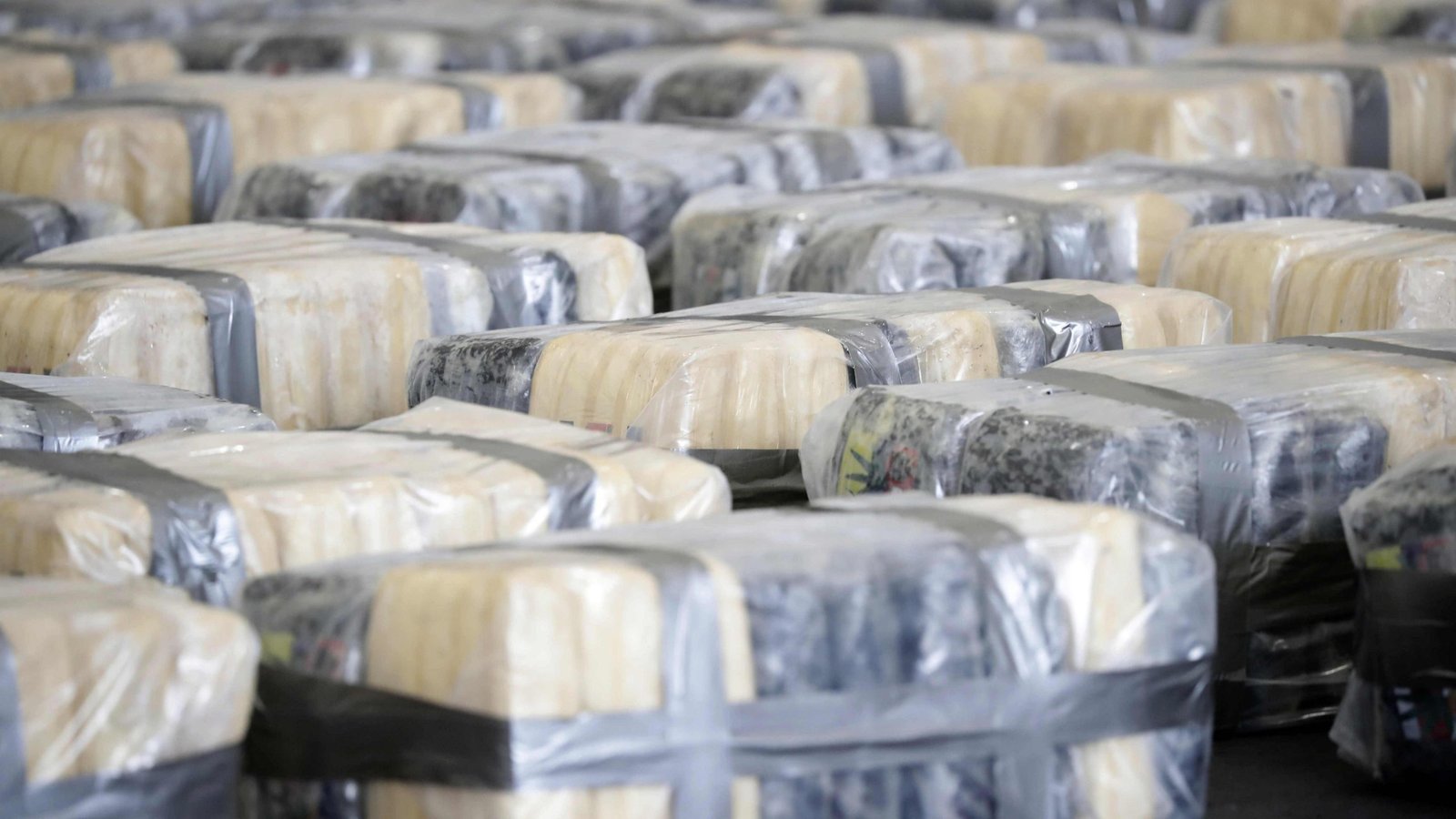
In 2025, the Narcotic Control Commission of Ghana arrested three individuals suspected of masterminding a 1,158-kilogram cocaine shipment to Belgium—one of the largest such seizures in the nation’s history (Primenewsghana, 2025). This high-profile arrest was not the result of Ghanaian vigilance, but rather the product of intelligence shared by Belgian authorities. The critical question, then, is unavoidable: were Ghanaian officials at the port of departure asleep, complicit, or simply indifferent as nearly 1.2 metric tons of cocaine slipped through their fingers?
Equally troubling is the lack of transparency regarding the aftermath of this case. What, if anything, emerged in terms of prosecutions or institutional reform? Calls for public vigilance and exhortations to report suspicious shipments serve as little more than a convenient distraction—a time-honoured tactic in Ghanaian officialdom, emblematic of the proverbial ostrich burying its head in the sand. Such measures do nothing to root out the real enablers: the officials who, through negligence or active collusion, provide kingpins and their mules with the legitimate paperwork needed to cloak their crimes in the garb of respectability (Primenewsghana, 2025).
In March 2025, Ghana announced the seizure of an astonishing 3,319.66 kilograms of cocaine, valued at an estimated US$350 million—figures rivalling the drug hauls in Mexico (Citi Newsroom, 2025). The sheer scale of this operation signals that Ghana is no longer a peripheral actor but a serious contender for the world’s gold medal in drug trafficking. Yet, in typical fashion, the masterminds—a well-connected criminal syndicate with international reach—vanished without a trace, eluding state agencies and evaporating into the ether. In a move that raises grave questions about procedural integrity, the seized narcotics were reportedly destroyed on court orders without preserving any portion as evidence to bolster the state’s case against the accused (Citi Newsroom, 2025). Such actions not only undermine the pursuit of justice but also embolden the very criminal networks Ghana purports to fight. If the country’s response to record-breaking drug seizures is to erase the evidence, one must question whether the rule of law is being upheld or systematically subverted.
In 2026, Australian authorities intercepted 320 kilogrammes of methamphetamine—valued at A$296 million—concealed in a charcoal shipment traced to Ghana, enough for 3.2 million street-level deals. Rather than acknowledging glaring failures in border security or detailing corrective actions, Ghana’s Narcotics Control Commission issued its routine communiqué, touting ongoing investigations and international cooperation while offering no real accountability (Graphic Online, 2026). This habitual reliance on empty rhetoric over substantive reform epitomizes institutional evasion and allows transnational criminal networks to thrive unchecked.
The cases outlined above are not isolated incidents; they reflect a deeply corrupt system in which insiders—including powerful sponsors—are willing to jeopardize the nation’s health and international reputation for personal gain. These crises are the direct consequence of those in authority willfully ignoring a grave national security threat, abetted by policymakers and leaders whose apathetic attitudes and toothless policy pronouncements merely pay lip service to the fight against narcotics. Issuing directives without legal teeth is an empty gesture, utterly insufficient to arrest the rising tide of drug trafficking.
Even more troubling is the perverse incentivization of criminality: treating cocaine seizures and trafficking as just another facet of the national revenue stream. In this warped calculus, government employees implicated in drug crimes are not held accountable but are instead quietly transferred or subjected to symbolic interdiction, a cynical maneuver designed to placate public anger while ensuring business as usual. Such institutionalized complicity not only erodes the rule of law but also entrenches Ghana’s status as a burgeoning hub for the international narcotics trade.
Below, I present two first-hand examples from Kotoka International Airport that, while not explicit accusations of criminal conduct, expose glaring security vulnerabilities, poor judgment, and an alarming abuse of authority. In 2024, as I prepared to depart Ghana, I personally observed a police officer—of the rank of Inspector or Assistant Superintendent—escorting a woman carrying a child from the departure lounge, bypassing the standard immigration checks and accompanying her directly to the boarding gate. Neither the woman nor the child faced the exhaustive scrutiny expected of airline passengers. It is reasonable to surmise that the officer, likely acting on orders from a superior, was extending an illicit privilege to a wife, sister, or close family member. Such actions, while perhaps rationalized as harmless favours, are in fact emblematic of a deeper institutional malaise—where personal connections routinely trump established procedures, creating fertile ground for security breaches and undermining the integrity of border controls. These incidents, though seemingly minor, signal a pattern of systemic negligence and favouritism that erodes public trust and compromises national security.
In 2026, I watched with growing disquiet as a young woman, arriving on KLM—the Royal Dutch Airline—was met at the baggage carousel by four female army officers: two junior and two senior. For nearly two hours, these officers devoted themselves to assisting her with her luggage. Upon inquiry, I discovered that they had entered the arrival lounge with a senior male officer—presumably the woman’s father—whose authority was evident in the deference he commanded, culminating in a perfunctory salute as her bags were packed onto a cart and wheeled away.
This episode, like those before it, lays bare a broken culture in which rank and position consistently trump the law. Officers who should embody the highest standards of integrity instead exploit their offices to subvert security protocols, extending privileges and facilitating easy passage for their loved ones without regard for the security risks or the dangerous signal it broadcasts to criminal networks: that the mere display of status, real or assumed can bypass the airport’s security dragnet. These instances, compounded by the rampant extortion and bribery at the airport, make a mockery of Ghana’s purported fight against cocaine—a fight that, as these examples suggest, may amount to little more than lip service in the quest for international recognition in the battle against narco-terrorism.
The cocaine industry—an undeniable, deeply rooted enterprise in Ghana—presents a security dilemma of the highest order. The evidence is irrefutable: this illicit trade fertilizes and sustains a complex web of international narco-criminal networks, with kingpins from Colombia, Mexico, Bolivia, and Peru operating hand-in-glove with their Nigerian and Ghanaian franchises. Ghana has become an indispensable node in a transcontinental narcotics supply chain.
The revenues generated are colossal and corrosive, fueling the importation of weapons, fostering violence, and embedding criminal elements within the core of state security apparatuses. Even more troubling, these illicit funds are channelled into political campaigns, effectively underwriting the rise of individuals whose later investigations expose them as mere cogs in narco-organizations—planted strategically in positions of power to advance the interests of criminal syndicates. The result is a cycle of corruption and complicity, where the machinery of the state is repurposed to serve those intent on undermining its very existence.
A toxic synthesis of societal apathy, soaring unemployment, abysmal educational retention, and an unbridled pursuit of money—no matter how illicit—has set Ghana on a perilous trajectory. The nation is manufacturing an army of youth ready to serve as couriers and enforcers for drug cartels and criminal syndicates simply to survive. This is not conjecture, but a reality evident on the streets of Accra and in illegal mining zones, where countless young people can scarcely engage in basic discourse about life or the future.
Many are propelled by the lure of fast money, blind to the catastrophic consequences of criminal involvement. In the informal slums and precarious communities of Accra—Alajo, Conca, Kasoa, Dome, and others—the vocabulary of the street has become common currency: “killer,” “don,” “boss,” “ghetto boy,” “ghetto girl,” “wild.” These words are not just slang, but markers of a societal malaise—a grim testament to a generation seduced by the promise of easy gain and abandoned by a nation unwilling or unable to offer legitimate opportunity or hope.
The solution to Ghana’s drug crisis is unambiguous: overhaul the nation’s criminal laws and penal code. Ghana’s liberal approach—championed by politicians eager for international validation—has made the country a magnet for global drug syndicates. To reverse this, Ghana must embrace uncompromising penalties, such as death or life imprisonment without parole for drug offences, as enforced in Singapore, Vietnam, and Thailand. These measures, though severe, have proven effective elsewhere and would serve as a powerful deterrent. Moreover, any government or public official implicated—even peripherally—in drug crimes should suffer the same fate as traffickers. Trials should be swift, sentences harsh, and the cost of participation excruciating. Only by erasing impunity and imposing real consequences can Ghana hope to avoid becoming a sanctuary for international narcotics crime.
State seizure and immediate liquidation of assets belonging to drug dealers and their accomplices—including public officials—must become standard policy, with proceeds directly funding anti-narcotics initiatives. Any public or government official implicated in drug trafficking should be summarily dismissed, with earnings and pensions frozen pending the results of an independent investigation. Only such uncompromising measures will disrupt criminal networks and restore integrity to Ghana’s institutions.
Combating the drug crisis requires bold, visionary leadership—not leaders distracted by elections, platitudes, or religious dogma. Ghana needs those who will not hide behind slogans or moral evasions when decisive action is needed. Only principled leadership can end impunity and protect the nation’s future. The government must make real investments in youth employment, forging public-private partnerships to provide jobs and living wages. Treating the cocaine epidemic as business as usual is as reckless as ignoring terminal cancer: it invites irreversible decline and the spectre of a failed state. Are our leaders listening? I would not bet on it.
References
Citi Newsroom. (2025, March 27). Ghana seizes over 3,300kg of cocaine worth $350m; suspects on the run. https://citinewsroom.com/2025/03/ghana-seizes-over-3300kg-of-cocaine-worth-350m-suspects-on-the-run/
Daily Graphic. (2007, April 30). MV Benjamin cocaine saga: Ex-cop alleges bribery, cover-up. Graphic Communications Group.
GhanaWeb. (2024, June 18). Dutch woman arrested in Belgium after leaving Ghana with cocaine; GACL officers implicated. https://www.ghanaweb.com/GhanaHomePage/NewsArchive/Dutch-woman-arrested-in-Belgium-after-leaving-Ghana-with-cocaine-GACL-officers-implicated-1923847
Graphic Online. (2026, April 15). Australian police seize $296m meth shipment traced to Ghana. https://www.graphic.com.gh/news/general-news/australian-police-seize-296m-meth-shipment-traced-to-ghana.html
MyJoyOnline. (2014, June 17). Ex-detective reveals how MV Benjamin cocaine went missing. https://www.myjoyonline.com/ex-detective-reveals-how-mv-benjamin-cocaine-went-missing/
Primenewsghana. (2025, March 12). Narcotics Control Commission arrests three over 1,158kg cocaine shipment to Belgium. https://www.primenewsghana.com/general-news/narcotics-control-commission-arrests-three-over-1-158kg-cocaine-shipment-to-belgium.html
